 Save to Pinterest
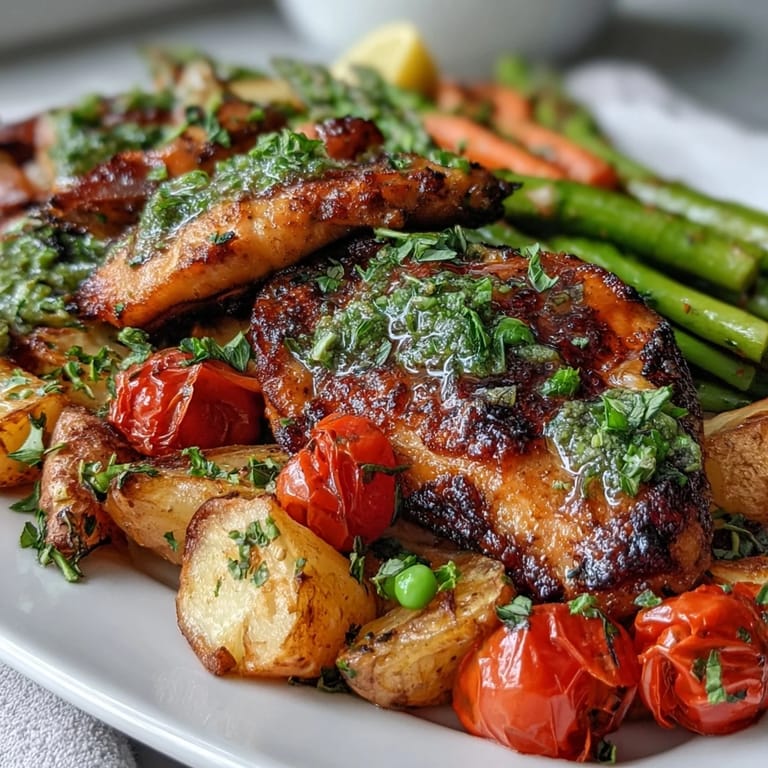
 Last spring, I was standing in my kitchen on a Tuesday evening, staring at a nearly empty fridge and a pile of farmers market vegetables that needed rescuing. My partner was coming home hungry, and I had maybe thirty minutes to pull something together that didn't feel like a weeknight scramble. That's when this sheet pan dinner clicked into place—one pan, honest ingredients, and the kind of meal that tastes like you actually tried, even when you're working against the clock.
I made this for my sister's surprise visit once, and she sat at the kitchen counter watching the pan come out of the oven, asking why I'd never made it before. The smell alone—garlic and lemon and roasted spring vegetables filling the kitchen—felt like it was doing half the work for me. She went back for seconds and asked for the recipe that same night.
Ingredients
- Boneless, skinless chicken breasts: Four breasts give you enough protein for four people without any fussing—they cook evenly on a sheet pan and stay surprisingly tender when you don't overbake them.
- Asparagus: Trimmed and cut into two-inch pieces, it softens just enough without turning mushy, and those caramelized ends are where all the flavor hides.
- Cherry tomatoes: Halved so they release their sweetness into the pan, creating little pockets of brightness among the other vegetables.
- Sugar snap peas: Leave them whole or halve them depending on how much you like them in your bite—they stay crisp-tender and add a pleasant sweetness.
- Baby carrots: Halved lengthwise means they cook faster and get this gorgeous caramelization on the cut side, which is honestly the best part.
- Red onion: Sliced into wedges, it mellows out during cooking and becomes almost sweet, anchoring the brighter vegetables around it.
- Yellow bell pepper: Sliced and roasted, it adds color and a subtle sweetness that balances the herbaceous marinade.
- Olive oil: Three tablespoons is enough to coat everything and help the vegetables caramelize without making the whole pan feel greasy.
- Fresh lemon juice: This is what keeps everything from feeling heavy—the acidity cuts through and wakes up every vegetable it touches.
- Garlic: Two minced cloves dissolve slightly into the oil, creating a subtle backbone that makes people ask what they're tasting.
- Dijon mustard: A teaspoon seems small, but it adds this gentle tang and helps emulsify the marinade so it actually clings to the chicken and vegetables.
- Honey: Just a teaspoon balances the lemon and mustard, rounding out the dressing into something that tastes intentional rather than tart.
- Oregano and thyme: Dried herbs work fine here since they have time to bloom in the oven, filling the kitchen with that Mediterranean herb smell.
- Salt and pepper: These aren't afterthoughts—they're essential for drawing out flavors in the vegetables and making the chicken taste like itself.
- Fresh parsley: Scattered on top right before serving, it's color and freshness that reminds you this came from real plants.
Tired of Takeout? 🥡
Get 10 meals you can make faster than delivery arrives. Seriously.
One email. No spam. Unsubscribe anytime.
Instructions
- Set your oven and pan:
- Preheat your oven to 425°F and line a large sheet pan with parchment paper or a light coating of oil—this prevents sticking and makes cleanup almost meditative. Think of this as giving yourself permission to not worry about scrubbing later.
- Build your marinade:
- In a small bowl, whisk together the olive oil, lemon juice, minced garlic, Dijon mustard, honey, oregano, thyme, salt, and pepper until it looks like a thin vinaigrette. You'll know it's right when it smells bright and herbaceous and the mustard has mostly dissolved into the oil.
- Coat the chicken:
- Arrange your chicken breasts on the sheet pan and brush both sides with half of that golden marinade, making sure every surface gets touched. This is when you're doing half the seasoning work—the other half happens when the vegetables join.
- Dress the vegetables:
- In a large bowl, toss all your prepped vegetables with the remaining marinade until everything glistens and looks coated. Take your time here because getting each vegetable piece dressed means nothing will taste bland.
- Arrange on the pan:
- Scatter the dressed vegetables around the chicken in as close to a single layer as you can manage—overcrowding the pan makes steam instead of caramelization. Nestle them so they're mostly touching the hot pan surface, not piled on top of each other.
- Roast and listen:
- Into the oven it goes for 25 to 30 minutes—you'll know it's working when your kitchen starts smelling incredible and you can see the edges of the vegetables starting to brown. The chicken is done when an instant-read thermometer slides into the thickest part and reads 165°F.
- Rest and finish:
- Let everything sit on the counter for five minutes after it comes out—this sounds small, but it lets the juices redistribute through the chicken so it stays moist when you cut into it. Scatter the fresh parsley over everything and squeeze lemon wedges over each plate if you want that extra brightness.
 Save to Pinterest
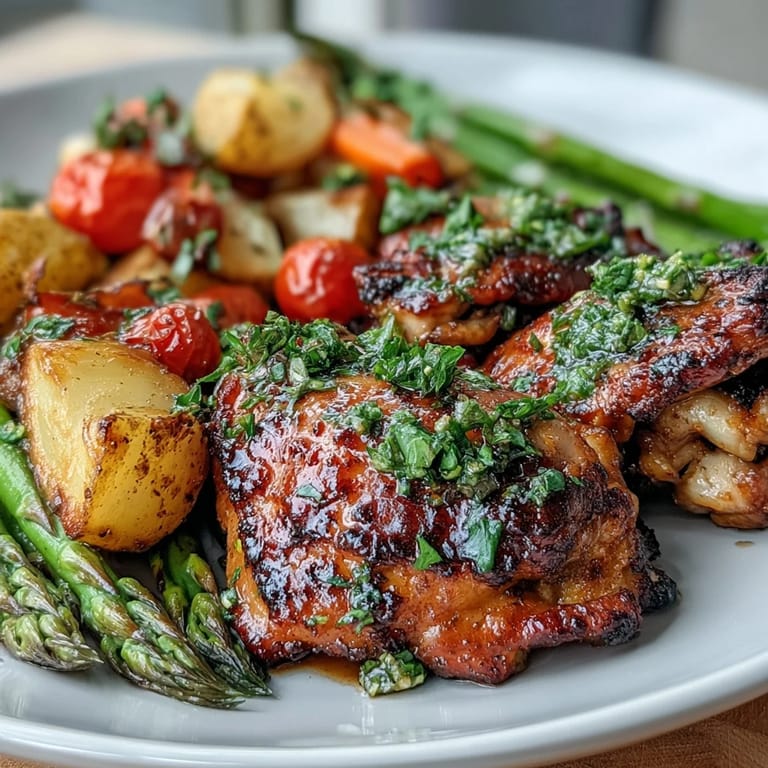
 One Sunday morning, my neighbor smelled this cooking through our shared wall and knocked on the door asking if everything was okay, thinking something amazing was happening. Turns out it was just lunch, but that moment made me realize how a simple sheet pan dinner can fill a whole space with something that feels celebratory instead of obligatory.
Timing Your Weeknight Success
The whole operation takes forty-five minutes from start to table, which is short enough that you can start it while answering emails or helping with homework. Prep your vegetables while the oven preheats—fifteen minutes of chopping feels manageable when you know the cooking part is truly hands-off. By the time people sit down, you've actually had time to make a salad or set the table instead of stress-cooking in front of an open oven.
Making It Your Own
This recipe is a template more than a law, which is exactly why I keep coming back to it. Spring vegetables can mean whatever your farmers market is selling—zucchini works, radishes add peppery crunch, and if you want to throw in a handful of green beans nobody will object. The timing shifts slightly if you use bigger or denser vegetables, but even then you're still in the thirty-minute window.
The Details That Actually Matter
Boneless thighs would be darker, more forgiving if you accidentally roast them a few minutes too long, and honestly a little more flavorful—swap them in without changing anything else if chicken breasts aren't your thing. The lemon juice in the marinade does almost all the seasoning heavy lifting, so don't skimp on using fresh juice if you have it—bottled works, but there's a noticeable difference. If you want to push this toward something more indulgent, crumbled feta scattered across right before serving transforms it into something that feels almost like company dinner.
- A crisp Sauvignon Blanc or light rosé makes this feel intentional and pairs almost unnaturally well with the lemon and herbs.
- Leftover chicken and vegetables are incredible chopped cold the next day over salad or mixed into grain bowls for lunch.
- Trust your oven's temperature—if your 425°F feels hot, the chicken might cook in twenty-five minutes instead of thirty, so check early rather than guessing.
 Save to Pinterest
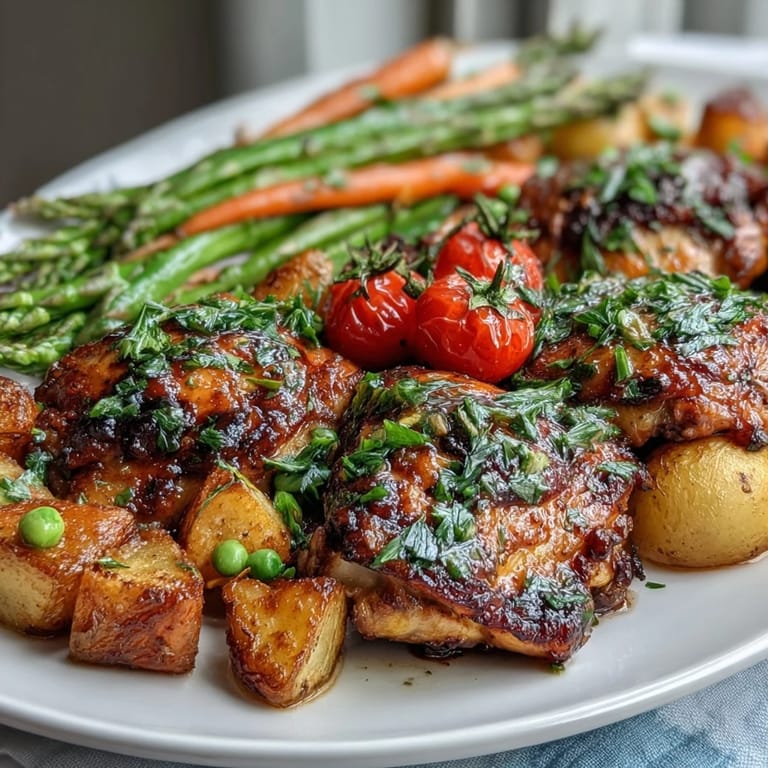
 This sheet pan dinner has become the recipe I reach for when I want to feed people something that tastes considered without feeling like I've spent the whole day cooking. It's proof that the best meals aren't always complicated—sometimes they're just honest vegetables and properly cooked chicken, given enough time and heat to become something worth sitting down for.
Recipe FAQs
- → Can I substitute the chicken breasts with another cut?
Yes, boneless skinless chicken thighs can be used instead. They may require slightly different cooking times but will add rich flavor.
- → What other vegetables work well with this dish?
Spring vegetables like zucchini, radishes, or baby potatoes are great alternatives. Adjust cooking time if adding potatoes.
- → How can I add extra flavor before serving?
Sprinkling crumbled feta cheese over the dish adds a tangy, creamy element that complements the vegetables and chicken.
- → What is the best way to ensure the chicken remains juicy?
Marinate the chicken with the dressing and avoid overcooking. Let it rest for 5 minutes after roasting before slicing.
- → Which beverages pair well with this meal?
A crisp Sauvignon Blanc or a light rosé nicely complement the fresh, herbaceous flavors of the chicken and vegetables.