 Save to Pinterest
 Squeezing lemons in the bright morning light, I couldn't help smiling as their zest filled the kitchen air—a scent sharp enough to shake me awake. This Lemon Curd Layer Cake was never a part of my family's usual baking repertoire, but the idea came to me on a whim while watching sunbeams flicker over a basket of fresh flowers from the market. Something about layering tart lemon curd and soft sponge felt perfectly celebratory, yet approachable for a special day like Mother's Day. The quiet thrill, I discovered, was in admiring the golden cakes cooling on the rack, knowing the real magic would be stacking them tall with cloud-like whipped cream. My hands still carry a trace of citrus whenever I make this cake, a secret detail only I seem to notice.
Last Mother's Day, my little niece insisted on placing every edible flower herself, announcing each one like it was the crowning jewel. We laughed so much we nearly forgot to take a photo before the first slice disappeared. There's something satisfying about the hum of the mixer, punctuated by gentle reminders to 'lick the bowl, not your fingers.' When the cakes emerged perfectly domed from the oven, our excitement was nearly as golden as the sponge itself. That afternoon, the first forkfuls disappeared to the soundtrack of grateful sighs and chatter, proving that no bakery cake could top a homemade one among loved ones.
Ingredients
- All-purpose flour: The backbone for soft, tender crumb—always spoon and level the flour for accuracy.
- Baking powder & baking soda: These give the layers their impressive lift; double-check they're fresh for the best rise.
- Salt: Just a pinch brightens the lemon and balances sweetness.
- Unsalted butter: Room temperature is key for that fluffy, creamy base when creaming with sugar.
- Granulated sugar: Well-beaten with butter, it gives a fine, tight crumb without weighing the cake down.
- Large eggs: Let them warm up to room temp—in cold weather, I place them in a bowl of warm water for a minute beforehand.
- Lemon zest & juice: The real star—use fresh lemons and zest before juicing so none escapes.
- Vanilla extract: A splash brings gentle warmth beneath all the citrus notes.
- Whole milk: Adds richness and keeps the cake moist; room temperature helps the batter mix smoothly.
- Powdered sugar: Sweetens the whipped cream frosting without the graininess of regular sugar.
- Heavy cream: Cold cream whips the thickest, fluffiest peaks—keep the bowl cold, too, on warm days.
- Edible flowers: They turn a simple cake into a centerpiece—always choose unsprayed, food-grade blooms.
- Butter for lemon curd: Stirring it in at the end makes the curd decadent and glossy, so don't rush this step.
Tired of Takeout? 🥡
Get 10 meals you can make faster than delivery arrives. Seriously.
One email. No spam. Unsubscribe anytime.
Instructions
- Prep your pans:
- Grease three 8-inch round cake pans and line the bases with parchment; the gentle crinkle as it fits in always means we're about to bake something special.
- Mix dry ingredients:
- Combine the flour, baking powder, baking soda, and salt in a bowl—watch the flour cloud as you whisk, it's oddly meditative.
- Cream butter and sugar:
- Beat the softened butter and sugar until extra pale and fluffy, about three minutes; the sound shifts from a soft thud to an airy swoosh when it's ready.
- Add eggs and citrus:
- Drop in eggs one by one, mixing each until blended, then stir in lemon zest, juice, and vanilla—the batter turns vibrantly yellow and smells dreamy.
- Alternate adding flour and milk:
- Add flour in three parts, alternating with milk starting and ending with flour—be gentle, just until no white streaks remain to keep the cake ultra light.
- Bake layers:
- Divide batter equally among pans, smooth the tops, and bake for 25–28 minutes; you'll know they're ready when a toothpick comes out clean and the kitchen fills with citrusy warmth.
- Cool the cakes:
- Let cakes rest in the pans for 10 minutes, then tip onto racks—the steam that escapes smells like pure comfort.
- Make lemon curd:
- Whisk eggs, sugar, lemon zest, and juice over medium heat, stirring as it thickens to a curd that clings to your spoon, then mix in cold butter and watch it go silky; cover and chill.
- Whip the cream:
- Beat cold heavy cream, powdered sugar, and vanilla with a mixer until you have pillowy peaks—stop as soon as it holds its shape when you pull the beater up.
- Assemble & frost:
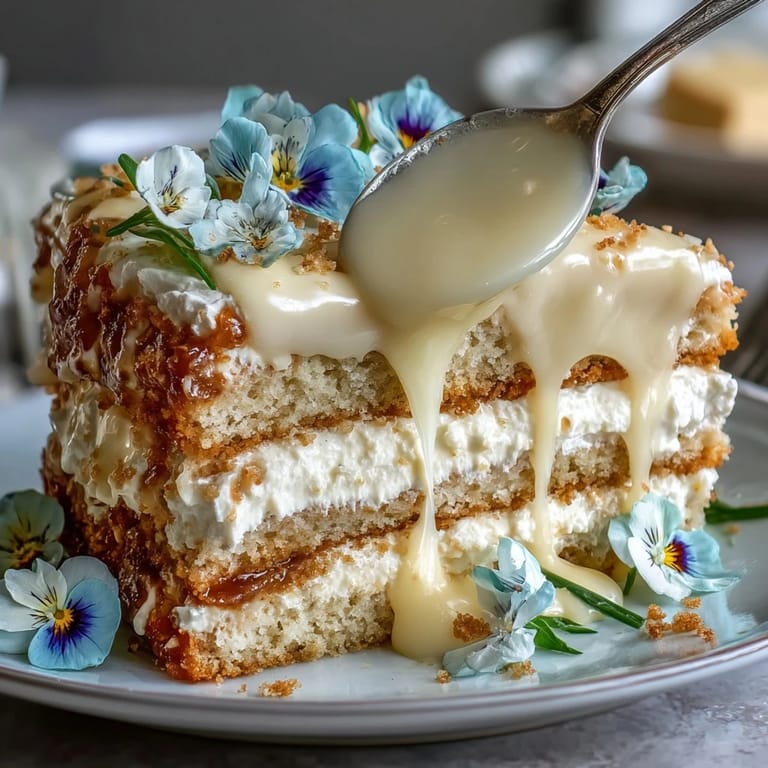
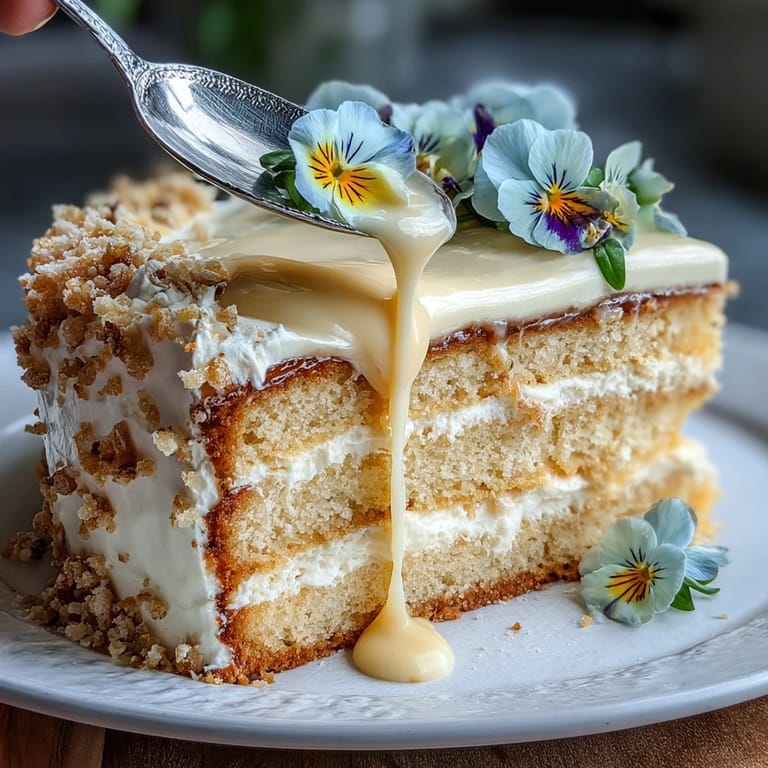
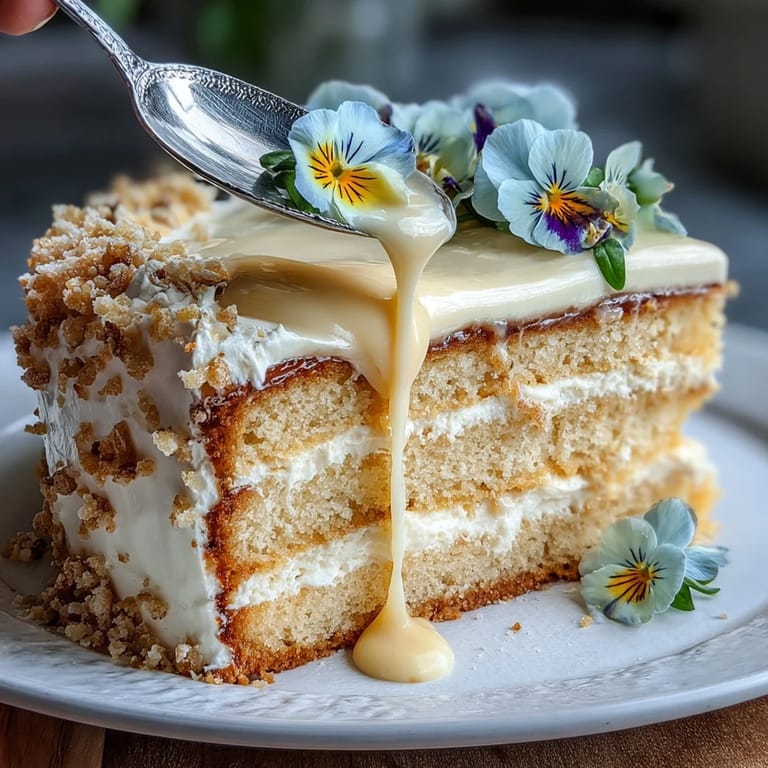
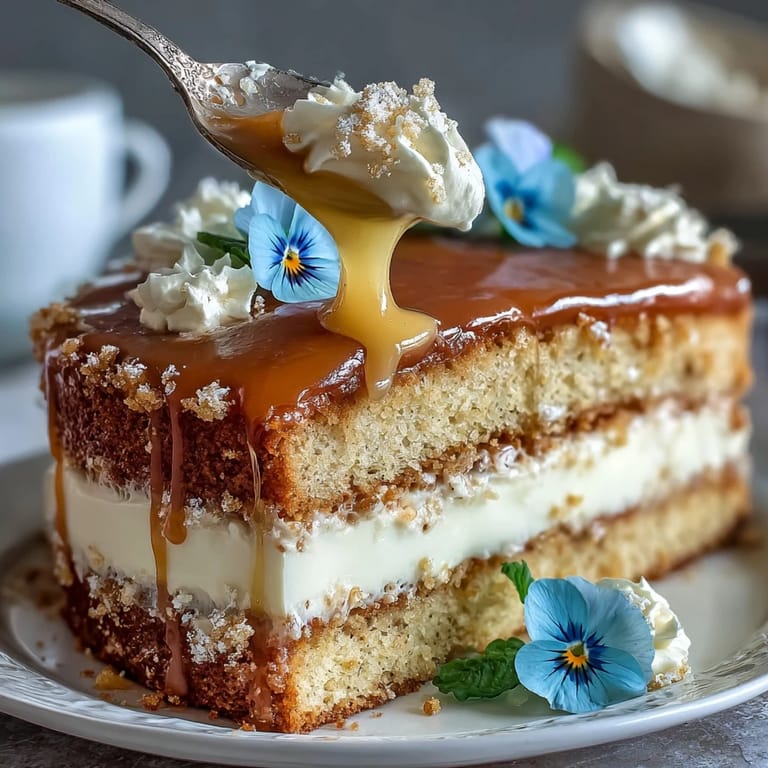
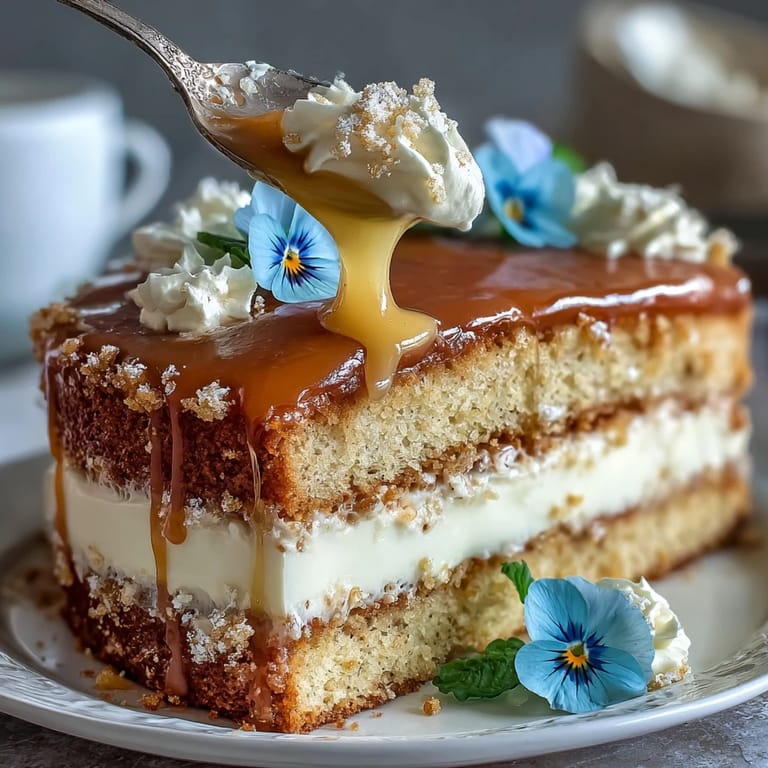
- Layer cakes with whipped cream and generous dollops of lemon curd, then frost all over—don't worry if it's a bit rustic, flowers will cover any imperfections.
- Decorate with flowers:
- Just before serving, gently press edible flowers all over; the effect is dazzling and instantly makes it feel like a special occasion.
 Save to Pinterest
  Save to Pinterest
 There was a quiet moment at the table as my mom admired the pretty blooms and took her first bite—she closed her eyes and just savored, reminding everyone that sometimes, food really does say it all. Later, I caught her saving one last flower to press in her journal, proof the cake lasted long beyond dessert.
Choosing and Using Edible Flowers
The first time I made this cake, I was hesitant about using edible flowers, but sourcing from a reliable farmer's market turned it into a mini adventure—don't be shy about asking vendors if the flowers are safe for eating. They wilt fast once on the cake, so decorate just before serving for best effect. Sometimes, gently rinsing and patting them dry with a paper towel preserves the petals and keeps everything looking picture-perfect.
Make Ahead for Less Stress
Now whenever a big gathering is coming, I bake the cake layers and prepare the lemon curd the night before so assembly is a breeze—both keep beautifully in the fridge. Chilled curd actually spreads a bit thicker and neater. Just remember to let the cakes come to room temp before stacking, or the whipped cream can melt faster than you'd expect.
Finishing Touches Everyone Will Remember
I've tried all sorts of patterns with the flowers, and sometimes a random, informal scattering looks even more enchanting than a perfectly arranged design. At the last minute, a handful of edible petals scattered over the top always makes the cake feel joyful and bright—like a wild bouquet. Let guests know which flowers are edible so everyone's comfortable trying them.
- If you're nervous about slicing, use a large serrated knife and wipe it between cuts.
- Any leftover lemon curd makes an irresistible toast spread or yogurt topping.
- Take a quick photo before serving; this cake disappears fast!
 Save to Pinterest
  Save to Pinterest
 This Lemon Curd Layer Cake brings genuine delight to the table—whether for Mother's Day or whenever something beautiful is called for. Each slice feels like a little celebration in itself.
Recipe FAQs
- → How long does the lemon curd take to thicken?
Cook the curd over medium heat, stirring constantly; it usually thickens in 5–7 minutes when it coats the back of a spoon. Remove from heat and whisk in butter to smooth before chilling.
- → Can I make components ahead of time?
Yes. Bake the cake layers and make the curd a day ahead; store both chilled and assemble on the day of serving for best texture and ease of slicing.
- → How do I keep whipped cream stable between layers?
Use very cold heavy cream and chill the bowl and beaters. Whip to stiff peaks and fold in a small amount of sifted powdered sugar; for extra stability, gently fold in a teaspoon of cornstarch or a stabilizer before assembly.
- → Are all edible flowers safe to use?
Only use food-grade, pesticide-free flowers such as pansies, violas, nasturtiums, and rose petals. Verify sourcing and avoid flowers not known to be edible.
- → How should I store leftovers?
Keep the assembled cake refrigerated, covered, for up to 2–3 days. Bring to cool room temperature before serving for the best texture and flavor.
- → Any tips for even layers and clean slices?
Trim domes for even stacking, chill layers slightly before spreading curd, and chill the finished cake for 30–60 minutes. Use a hot, clean knife between cuts for neat slices.