 Save to Pinterest
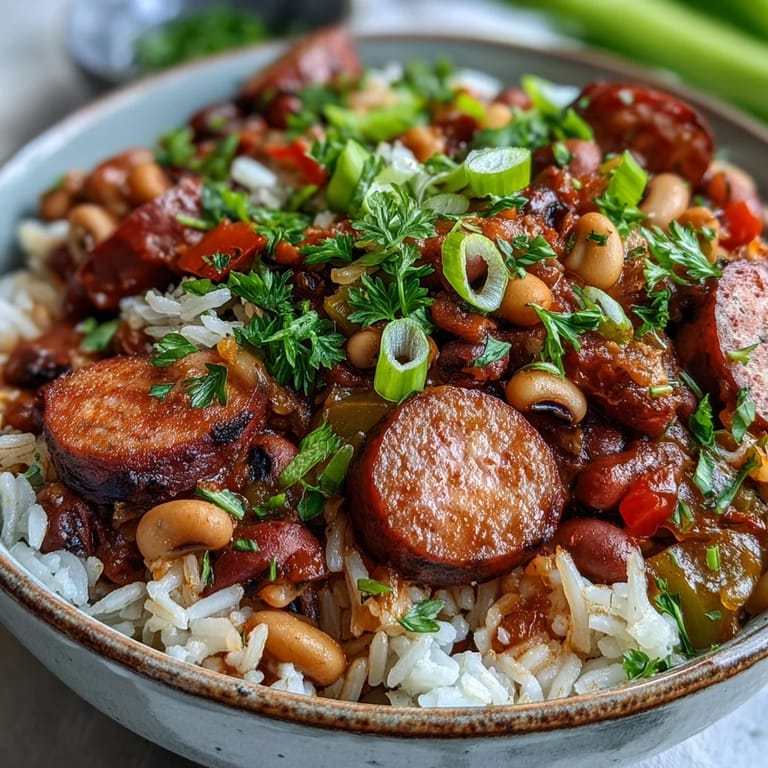
 The first time I made jambalaya, I was cooking for a crowd of friends on a rainy Sunday afternoon. I had doubled the recipe and my biggest pot was barely big enough. Someone kept opening the back door every few minutes, letting in cold drafts, and I was convinced the rice would never cook properly. But when I finally lifted that lid, the smell hit everyone at once and suddenly my tiny kitchen felt like the most welcoming place in the world.
Last winter my neighbor came over shivering from her walk home and I served her a bowl of this jambalaya straight from the stove. She took one bite and immediately asked for the recipe, saying it tasted like something her grandmother used to make. Now she makes it every time her kids visit from college.
Ingredients
- 340 g (12 oz) smoked sausage: Andouille gives the most authentic flavor but kielbasa works perfectly too, slice it about half an inch thick so it holds its shape
- 1 medium onion, 2 celery stalks, 1 red bell pepper, 1 green bell pepper: This combination is called the holy trinity in Cajun cooking and building this foundation properly makes all the difference
- 3 cloves garlic: Minced fresh garlic adds a aromatic punch that powder just cannot replicate
- 1 can (425 g/15 oz) black-eyed peas: Rinse them thoroughly to remove the canning liquid, this keeps your jambalaya from getting cloudy
- 300 g (1 ½ cups) long-grain white rice: Long-grain rice stays fluffy and separate, short-grain will turn this into more of a risotto texture
- 800 ml (3 ⅓ cups) low-sodium chicken broth: Low-sodium broth lets you control the salt level since the sausage and seasonings already bring plenty of flavor
- 1 can (400 g/14 oz) diced tomatoes with juices: Do not drain the can, those juices help cook the rice and add essential acidity
- 2 tbsp olive oil: A neutral oil with a decent smoke point for building your flavor base
- 1 ½ tsp Cajun seasoning, 1 tsp smoked paprika, ½ tsp dried thyme, ½ tsp dried oregano: This spice blend creates that signature Cajun profile without being overwhelming
- 1 bay leaf: Fresh bay leaves are more aromatic than dried if you can find them
- ½ tsp salt, ¼ tsp black pepper, ¼ tsp cayenne pepper: Adjust these to your taste, remembering you can always add heat but cannot take it away
- 2 spring onions, 2 tbsp fresh parsley: These fresh garnishes add brightness and color that cuts through the richness
Tired of Takeout? 🥡
Get 10 meals you can make faster than delivery arrives. Seriously.
One email. No spam. Unsubscribe anytime.
Instructions
- Build your flavor foundation:
- Heat the olive oil in your Dutch oven over medium heat and add the sliced sausage. Cook for about 4 to 5 minutes until the pieces develop a nice brown crust. This step renders some fat that will coat the vegetables and rice later.
- Soften the vegetables:
- Add the diced onion, celery, and both bell peppers to the pot. Stir occasionally and cook for roughly 5 minutes. The vegetables should be soft and translucent but not browned.
- Add the aromatic garlic:
- Stir in the minced garlic and cook for just 1 minute until fragrant. Garlic burns quickly so keep it moving and watch closely.
- Toast the rice:
- Add the rice to the pot and stir constantly for about 2 minutes. The grains should look slightly opaque and some might have a golden spot here and there. This helps the rice hold its texture during the long simmer.
- Combine everything:
- Pour in the chicken broth, the entire can of diced tomatoes with their juices, and the drained black-eyed peas. Add all your seasonings and the bay leaf. Stir well to distribute the spices evenly and scrape up any browned bits from the bottom.
- Simmer to perfection:
- Bring the mixture to a boil, then immediately reduce the heat to low. Cover tightly and let it simmer gently for 20 to 25 minutes. Resist the urge to peek, keeping the steam trapped is essential for proper rice cooking.
- Let it rest:
- Remove from heat and keep the lid on for 5 full minutes. This resting period lets the rice finish cooking evenly and allows the flavors to meld together.
- Finish and serve:
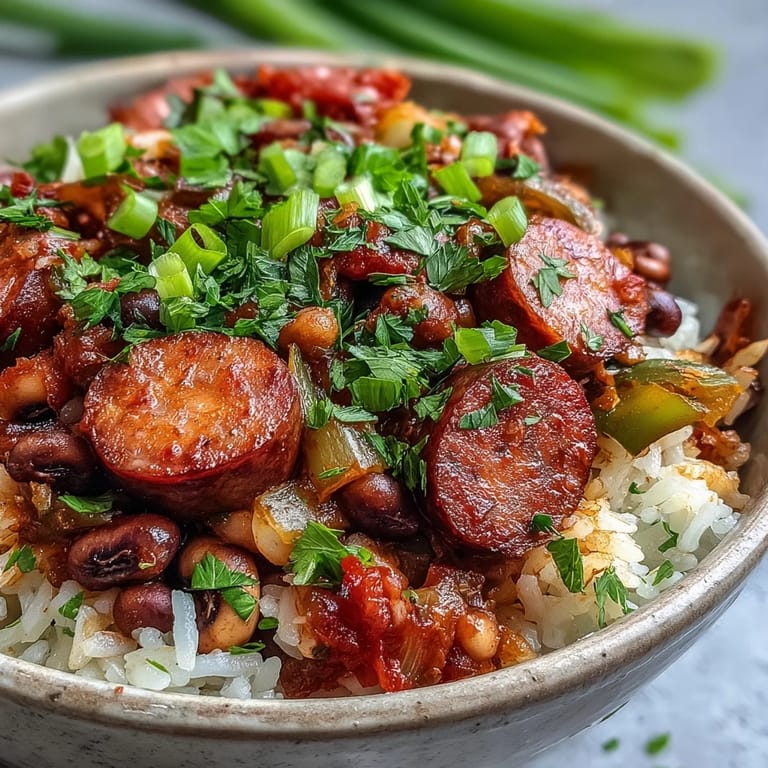
- Discard the bay leaf and fluff everything with a fork. Sprinkle the sliced spring onions and fresh parsley on top right before serving so they stay bright and fresh.
 Save to Pinterest
 This recipe has become my go-to for new neighbors and potluck dinners. Something about a steaming pot of jambalaya makes people feel at home, even in houses they have never visited before.
Making It Your Own
The beauty of jambalaya is how adaptable it is. I have made it with shrimp instead of sausage, added okra for extra body, and even used brown rice when that was all I had in the pantry. Each version is different but somehow still comforting.
Serving Suggestions
A simple green salad with a vinaigrette cuts through the richness perfectly. Cornbread or crusty bread on the side never hurts either. And keep that hot sauce handy because some people just need that extra kick.
Storage And Reheating
This jambalaya keeps beautifully in the refrigerator for up to four days and actually tastes better after the flavors have had time to develop together. The rice will absorb more liquid as it sits, so add a splash of broth when reheating.
- Freeze individual portions for those nights when cooking feels impossible
- Reheat gently on the stove with a splash of water to restore the texture
- The garnishes are best added fresh right before serving again
 Save to Pinterest
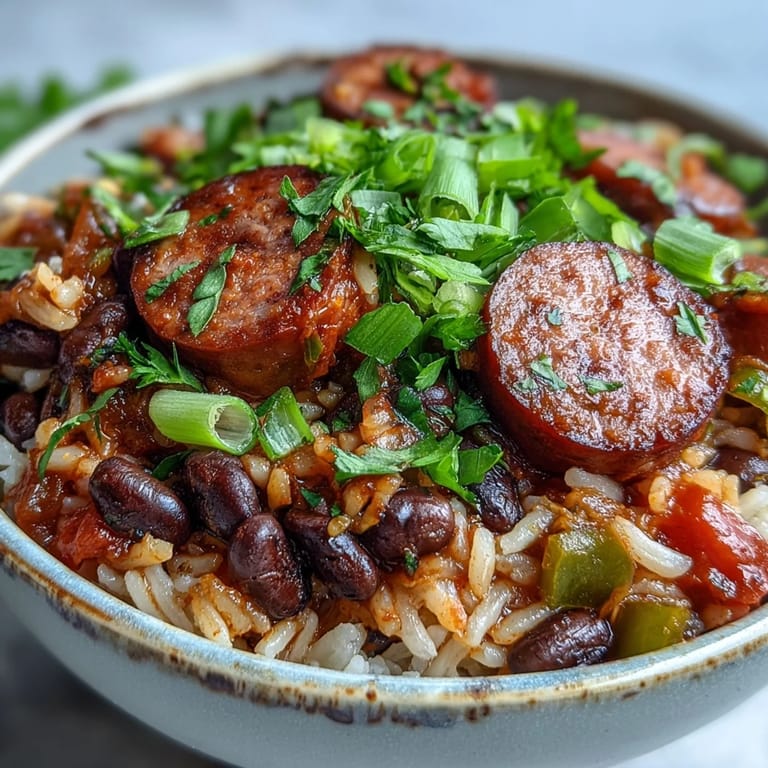
 There is something deeply satisfying about a one-pot meal that feeds a crowd and leaves everyone asking for seconds. This jambalaya is that kind of recipe.
Recipe FAQs
- → Can I make black-eyed pea jambalaya vegetarian?
Absolutely. Simply omit the smoked sausage and substitute vegetable broth for chicken broth. Consider adding extra black-eyed peas, mushrooms, or diced sweet potatoes to maintain heartiness and depth of flavor.
- → What type of rice works best?
Long-grain white rice is traditional for jambalaya because it stays separate and fluffy during cooking. Brown rice can be used but will require additional cooking liquid and time—about 45 minutes total simmering time.
- → How spicy is this dish?
The heat level is medium, coming from Cajun seasoning and optional cayenne pepper. Adjust the amount of cayenne or add hot sauce at the table to customize the spice level to your preference.
- → Can I use dried black-eyed peas instead of canned?
Yes, but they'll need to be soaked overnight and cooked separately until tender before adding to the jambalaya. Canned peas are convenient and work perfectly well in this one-pot preparation.
- → How should I store leftovers?
Store cooled jambalaya in an airtight container in the refrigerator for up to 4 days. The flavors often deepen overnight. Reheat gently with a splash of water or broth to restore moisture.
- → What can I serve with jambalaya?
This is a complete meal on its own, but cornbread, crusty French bread, or a simple green salad make excellent accompaniments. Offer hot sauce, pickled peppers, or hot pepper vinegar on the side.