 Save to Pinterest
 There's something about the rhythm of a wok that makes everything else fall away. I discovered chicken fried rice on a random Tuesday night when I had leftover rice, some chicken, and an inexplicable craving for something warm and alive. The sizzle when those ingredients hit the hot pan, the way the rice grains separate and glisten with soy sauce—it became my go-to when I needed comfort without fuss. Now it's the dish I make when friends drop by unannounced, or when my own kitchen feels chaotic and I need something simple to anchor the evening.
I remember the first time I made this for my roommate after she'd had a brutal day at work. She walked in to the smell of soy sauce and sesame oil floating through the apartment, and within minutes we were sitting at the counter with steaming bowls, not talking much, just eating. That meal shifted something—suddenly fried rice wasn't just something I made when I was hungry, it became the thing I made when I wanted to say I care without having to say much at all.
Ingredients
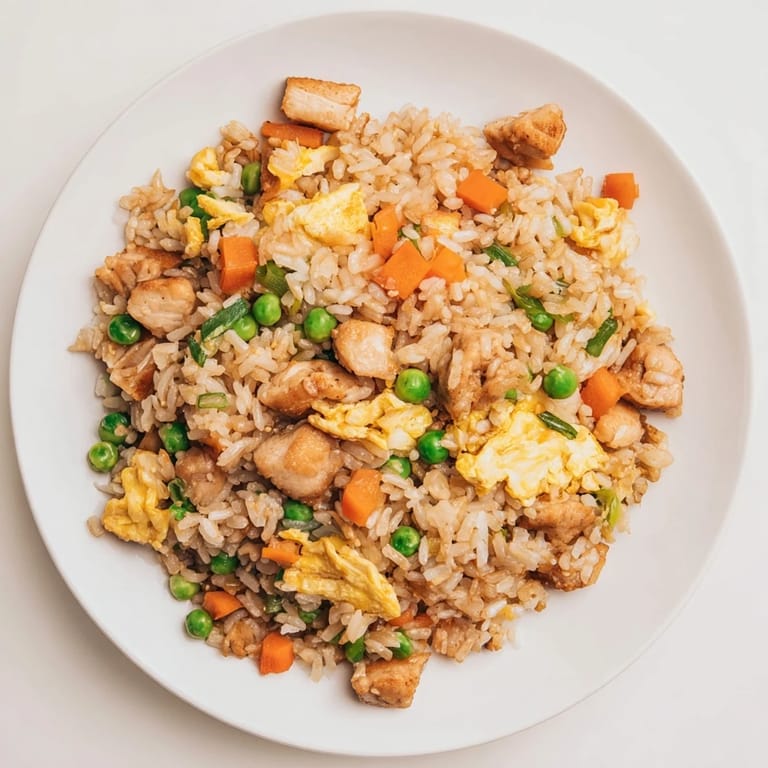
- Chicken breast or thigh (300g, diced): Thighs stay juicier than breast meat, but either works beautifully here. Dice them evenly so they cook at the same pace and finish in about 5 minutes.
- Large eggs (2): These become ribbons of soft yellow throughout the rice—the secret to that restaurant-quality texture. Cold eggs scramble differently than room temperature ones, so let them sit out for a few minutes.
- Carrot (1 medium, diced): The natural sweetness balances the salty soy sauce, and the small pieces cook quickly without turning mushy.
- Frozen peas (100g): Keep them frozen until the last moment; they'll thaw instantly in the hot wok and stay bright and tender.
- Onion (1 small, finely chopped): This becomes almost translucent and sweet when it hits the heat, creating a flavor base you'll taste in every bite.
- Spring onions (2, sliced): Save some for garnish—their fresh, sharp bite is what makes you reach for another forkful.
- Cooked rice (500g, preferably day-old): This is non-negotiable. Fresh, warm rice becomes mushy and sticky; yesterday's rice, chilled and dry, separates into perfect individual grains.
- Soy sauce (3 tbsp): The backbone of the dish, delivering salt and umami depth that ties everything together.
- Oyster sauce (1 tbsp, optional): A small splash adds mysterious richness, but the dish stands beautifully without it if you don't have it on hand.
- Sesame oil (1 tsp): A little goes so far—its nutty aroma wakes up your palate and makes people ask what that incredible smell is.
- Ground white pepper (1/2 tsp): Use white pepper here instead of black; it dissolves more invisibly into the sauce and adds heat without visible speckles.
- Vegetable oil (2 tbsp, divided): High heat oil is essential—it needs to be hot enough to sear the chicken and toast the rice grains.
Tired of Takeout? 🥡
Get 10 meals you can make faster than delivery arrives. Seriously.
One email. No spam. Unsubscribe anytime.
Instructions
- Set up your mise en place:
- Chop every ingredient before you turn on the heat, and if your rice is warm or clumpy, spread it on a plate and let it sit for a few minutes. The moment you start cooking, things move fast.
- Sear the chicken until golden:
- Heat half the oil in your wok over medium-high heat until it shimmers, then add the diced chicken. Let it sit for a moment before stirring so it gets a little color and texture. After 4 to 5 minutes, it should be cooked through with a subtle crust. Lift it out onto a clean plate.
- Build your vegetable base:
- Add the remaining oil, then toss in the onion and carrot. Stir them around for 2 to 3 minutes until the carrot starts to soften and the onion becomes fragrant. Add the peas and cook for one more minute—they'll go from frozen to tender and bright.
- Scramble the eggs:
- Push everything to the side of the wok and crack the eggs directly into the empty space. Let them sit for just a few seconds, then scramble them gently until they're barely set. They'll look a touch underdone—that's perfect, they'll cook the rest of the way when you add the rice.
- Toast the rice with everything:
- Add your rice and begin stirring everything together, working gently but deliberately to break up any clumps and coat every grain with the vegetables and egg. You'll hear it sizzle and pop—this is where the magic happens. After 2 to 3 minutes, every grain should be separated and glossy.
- Bring the chicken back and season:
- Return the cooked chicken to the wok, then pour in the soy sauce, oyster sauce (if using), sesame oil, white pepper, and a pinch of salt. Stir everything together for another 2 to 3 minutes so the flavors meld and the soy sauce coats every surface evenly.
- Finish with fresh spring onions:
- Stir in most of the sliced spring onions, then taste. If it needs more salt or soy sauce, now is the moment—adjust to your preference and give it one final toss.
- Serve and garnish:
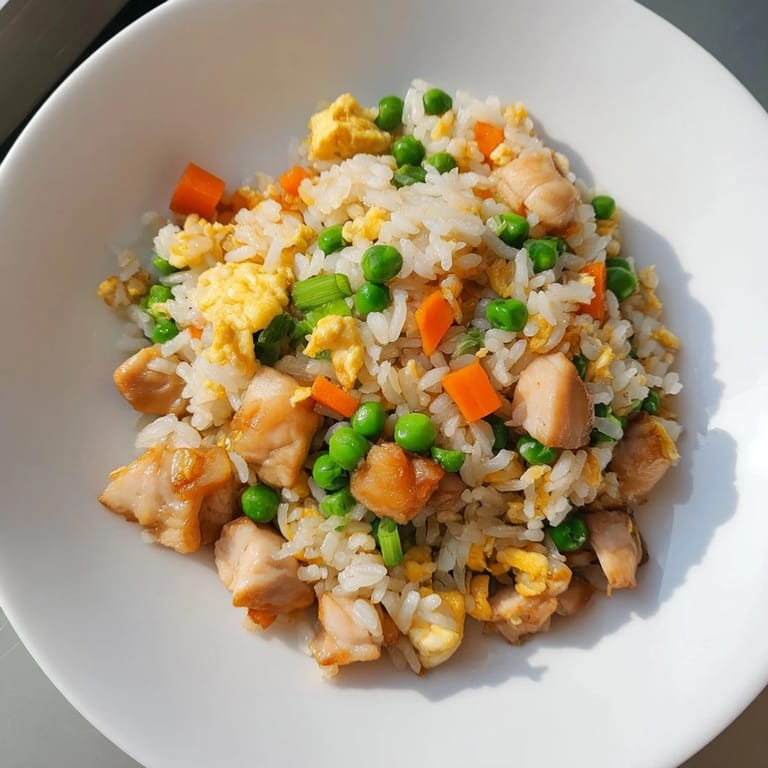
- Transfer everything to a serving bowl or divide into individual bowls while it's still steaming. Scatter the reserved spring onions on top and bring it to the table while the aroma is still rising.
 Save to Pinterest
 The night my sister tried this for the first time, she went back for seconds before everyone else had sat down. She asked if it was from a restaurant, and when I told her I'd made it, she laughed in disbelief. That's when I realized this dish has a quiet superpower—it tastes like it took way more effort than it actually did.
Why This Dish Works Every Time
Fried rice is forgiving because it's designed to rescue ingredients that are past their prime. Leftover rice, vegetables getting soft in your crisper drawer, that chicken breast from two days ago—they all transform into something vibrant and alive. The soy sauce and heat seal everything into one unified flavor, so there's nowhere for mediocre ingredients to hide, but there's also nowhere for them to fail. It's the kind of dish that teaches you that cooking isn't about being precious with fresh ingredients; sometimes it's about being resourceful with what you have.
The Secret to Restaurant-Quality Texture
The difference between home fried rice and the kind you order out comes down to two things: heat and timing. High heat keeps everything moving and prevents the rice from steaming into mushiness. But equally important is not overcrowding the wok—if your pan is too full or your heat isn't high enough, the rice will sit in moisture and lose its individual grain structure. Work in batches if you need to, or use the largest wok or skillet you have. The rice should sizzle and dance, not steam.
Making It Your Own
This recipe is a foundation, not a rule book. I've made it with shrimp when I was feeling fancy, with crumbled tofu when a vegetarian friend came over, and with leftover roast pork on a Wednesday night. The technique stays the same, but the soul of the dish changes based on what's in your kitchen and on your mind. Some nights I add bell peppers or snap peas for more color and crunch, other nights I'm minimal and let the chicken shine.
- Swap the chicken for shrimp, pork, beef, or crumbled tofu and cook times barely change.
- Add corn, bell peppers, bean sprouts, or mushrooms for extra body and flavor—just dice them small so they cook quickly.
- Serve with chili sauce, extra soy sauce, or a lime wedge so everyone can season to taste.
 Save to Pinterest
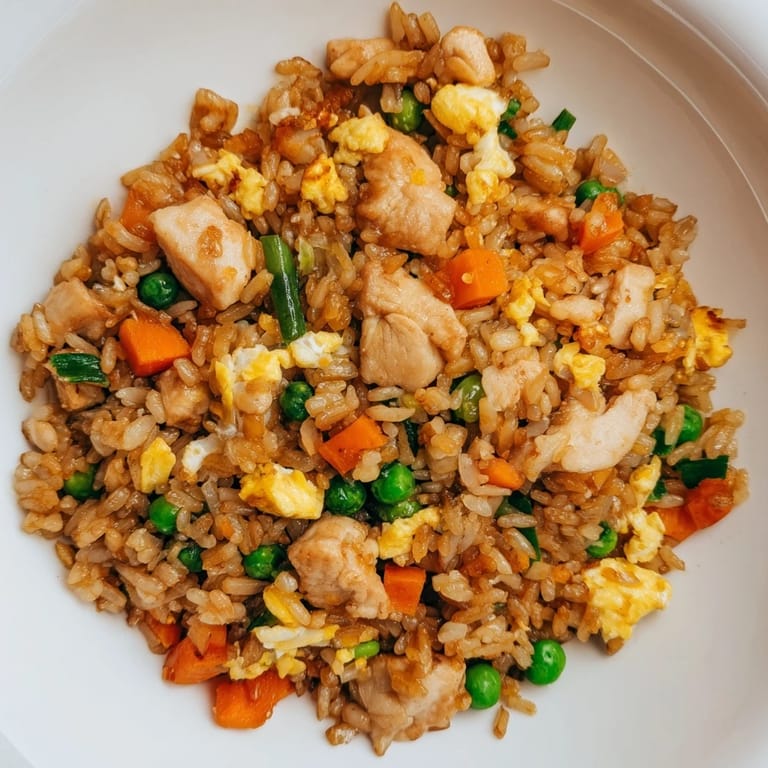
 Fried rice lives in that beautiful space between weeknight necessity and genuine comfort, which is probably why I keep coming back to it. It asks so little and gives so much back.
Recipe FAQs
- → Can I use other proteins instead of chicken?
Yes, shrimp, pork, or tofu can be excellent alternatives, adapting well to the stir-fry method.
- → Is freshly cooked rice suitable for this dish?
Day-old or chilled rice is preferred as it prevents clumping and ensures better texture during frying.
- → How can I adjust the flavors for spiciness?
Serving with chili sauce or adding sliced fresh chilies during cooking can add heat to suit your taste.
- → What vegetables work best in this stir-fry?
Carrots, peas, onions, and spring onions are classic choices; bell peppers or bean sprouts can be added for extra crunch.
- → Which oils are ideal for stir-frying this dish?
Vegetable oils with a high smoke point are recommended, while sesame oil is added at the end to enhance aroma.