 Save to Pinterest
 The first time I really understood General Tso's chicken wasn't in a restaurant, but in my tiny apartment kitchen at midnight, when a craving hit and I decided to just figure it out. I'd watched my roommate's mom make something similar years before, and the memory of that glossy, tangy-sweet sauce kept nagging at me. Two hours later, my kitchen smelled like toasted sesame and fried chicken, and I'd accidentally discovered that the secret wasn't just technique—it was patience with the sauce, letting it reduce until it caught the light like lacquer.
I made this for my partner on a rainy Tuesday when they'd had a terrible day, and watching their face change from tired to genuinely happy was the kind of small victory that reminds you why cooking for people matters. They asked for seconds and didn't even touch their phone, which in our house is basically the highest compliment possible.
Ingredients
- Boneless, skinless chicken thighs (600 g): Thighs stay juicy even when fried, unlike breast meat which can turn dry—this is the move if you want texture that doesn't disappoint.
- Eggs, soy sauce, sesame oil, white pepper: This marinade is your insurance policy; it seasons the chicken from the inside out before the crust even forms.
- Cornstarch and all-purpose flour (120 g and 60 g): The ratio of cornstarch to flour matters—too much flour and you lose that shattering crispness, too little and it gets greasy.
- Vegetable oil for frying: Use an oil with a high smoke point; peanut oil is traditional and really does make a difference.
- Chicken broth, soy sauce, rice vinegar, hoisin sauce, sugar: These five ingredients are the soul of the sauce—the balance between salty, sweet, and tangy is what makes people ask for the recipe.
- Cornstarch slurry: This thickens the sauce into something glossy and clingy rather than thin and runny.
- Sesame oil: A finishing touch that adds nuttiness; don't skip it or use it in the cooking, save it for the last moment.
- Dried red chilies or chili flakes: These bring heat and a subtle smoky note that fresh peppers just can't deliver.
- Garlic, ginger, spring onions, sesame seeds: Aromatics and garnish that make the dish feel complete and intentional.
Tired of Takeout? 🥡
Get 10 meals you can make faster than delivery arrives. Seriously.
One email. No spam. Unsubscribe anytime.
Instructions
- Marinate the chicken:
- Whisk eggs with soy sauce, sesame oil, and white pepper in a large bowl, then coat the chicken pieces thoroughly. This step takes five minutes but changes everything—the chicken absorbs salt and moisture that keeps it tender even through the frying.
- Coat and prepare:
- Mix cornstarch and flour in a shallow bowl and dredge each piece, shaking off excess so you get a light, even coating rather than a thick crust. Work in batches if your bowl is small.
- Fry until golden:
- Heat oil to 350°F in a deep pan—use a thermometer because guessing leads to disappointment. Fry in batches for about four to five minutes per batch until deeply golden, then drain on a wire rack rather than paper towels, which trap steam and soften the crust.
- Build the sauce:
- Combine broth, soy sauce, rice vinegar, hoisin, sugar, and sesame oil in a small bowl. Make a slurry with cornstarch and water and stir it in—this mixture should smell balanced, not aggressively salty or sweet.
- Bloom the aromatics:
- Heat oil in a clean wok over medium heat and add dried chilies, minced garlic, and grated ginger. Stir for about a minute until the kitchen smells incredibly fragrant and you can see the oil turn slightly red from the chilies—this is where the flavor deepens.
- Thicken and finish:
- Pour in the sauce and stir constantly for two to three minutes as it transforms from thin liquid into something glossy and clingy. When it coats a spoon and slowly drips, you've nailed the texture.
- Combine and serve:
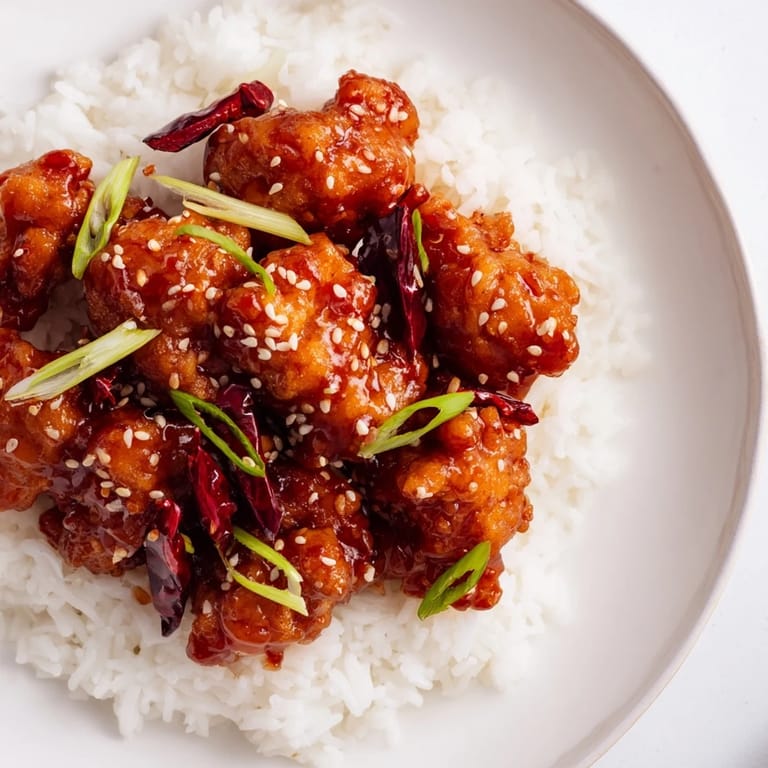
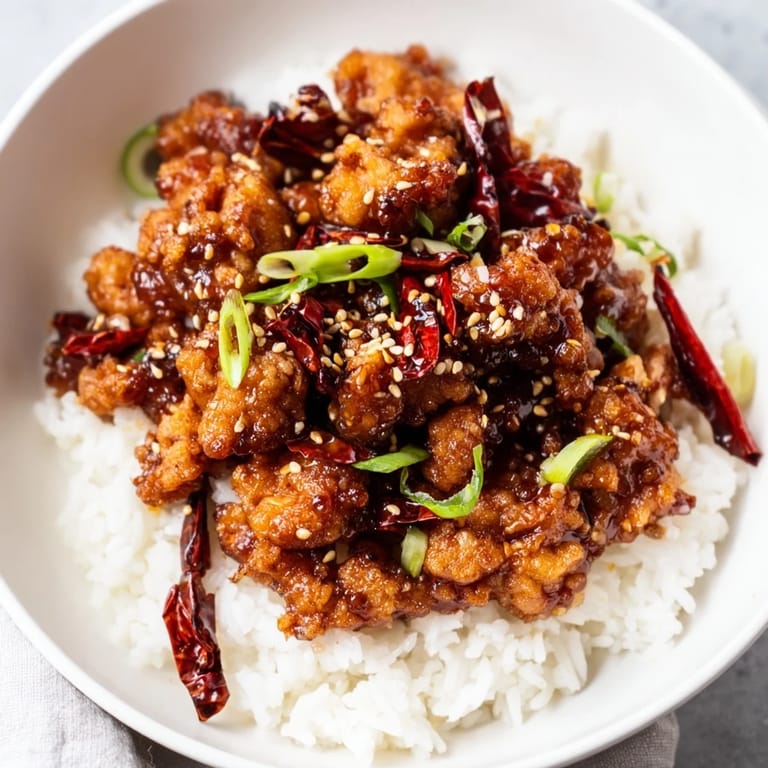
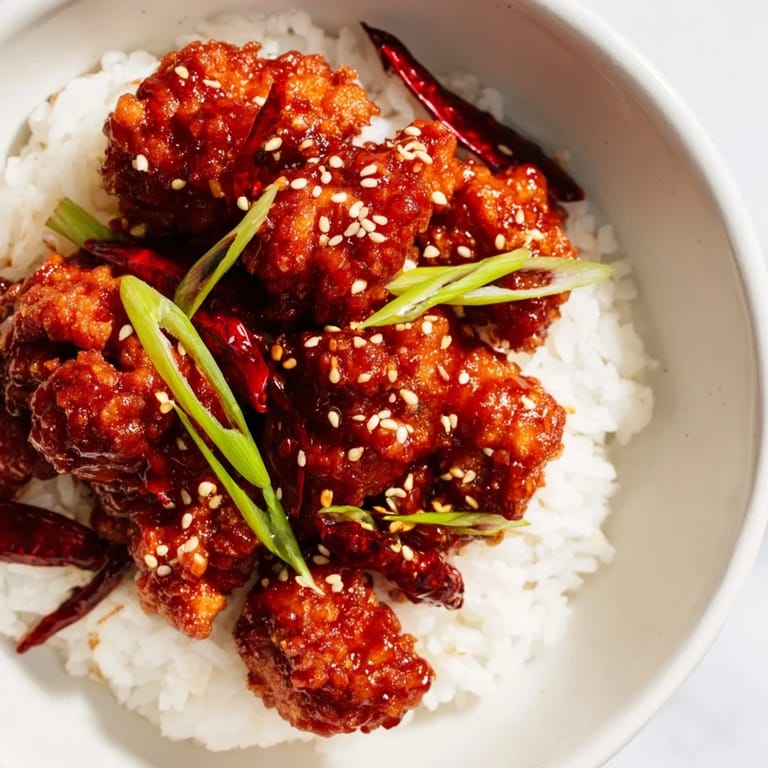
- Toss the fried chicken pieces in the sauce until every piece is coated, then transfer to a serving dish and top with fresh spring onions and toasted sesame seeds. Serve immediately over steamed rice.
 Save to Pinterest
 Years later, I realized that this dish became a standby not because it was fancy, but because it was reliable—something I could make when I wanted to feel competent and generous at the same time. It's the kind of recipe that reminds you that good food doesn't always mean complicated.
Getting the Sauce Right
The balance of this sauce took me a few tries to understand. Too much sugar and it tastes like candy; too much soy and it gets one-note and salty. The vinegar is the secret weapon—it cuts through everything and adds brightness that makes the sauce feel sophisticated rather than just sweet. Start with the recipe as written and adjust from there, tasting as you go. Rice vinegar matters more than you'd think; regular white vinegar will make it taste off-balance and sharp.
Why Thighs Change Everything
Chicken thighs have more fat and connective tissue than breast meat, which means they stay moist and tender even after being fried at high heat. Breast meat can work, but you have to be more careful not to overcook it, and you lose some of the richness that makes this dish feel indulgent. If you're using breast, cut the pieces smaller and reduce frying time by about a minute. The thighs are forgiving in a way that matters when you're learning this recipe.
Small Tricks That Shift the Final Result
Toasting your own sesame seeds instead of using pre-toasted ones makes a noticeable difference—they smell nuttier and taste fresher. Letting the marinated chicken come to room temperature before frying helps it cook more evenly. Using a wok instead of a regular skillet for stir-frying the sauce creates more surface area for that glossy reduction to happen faster, which means better flavor concentration.
- Always use a thermometer for oil temperature; it's the most reliable way to get crispy chicken without guesswork.
- Keep your sauce ingredients measured and ready before you start frying—once the chicken comes out, everything moves fast.
- Serve immediately with rice, because this dish is at its best the moment it's finished, when the chicken is still crispy and the sauce is still hot.
 Save to Pinterest
 This recipe proves that you don't need complicated techniques to make something that feels special. It just needs attention, good ingredients, and the willingness to taste as you go.
Recipe FAQs
- → What cut of chicken works best?
Boneless, skinless chicken thighs are ideal for juiciness and flavor, but chicken breast can be used for a leaner option.
- → How can I adjust the spice level?
Modify the amount of dried red chilies or chili flakes to suit your preferred heat intensity.
- → Is deep-frying necessary?
Deep-frying gives the best crispiness, but baking or air-frying can provide a lighter alternative while retaining texture.
- → What sides pair well with this dish?
Steamed white rice complements it perfectly. Light white wines or jasmine tea also make excellent drink pairings.
- → How to make the sauce glossy and thick?
A cornstarch slurry added to the sauce while cooking helps thicken it and create a glossy coating on the chicken.