 Save to Pinterest
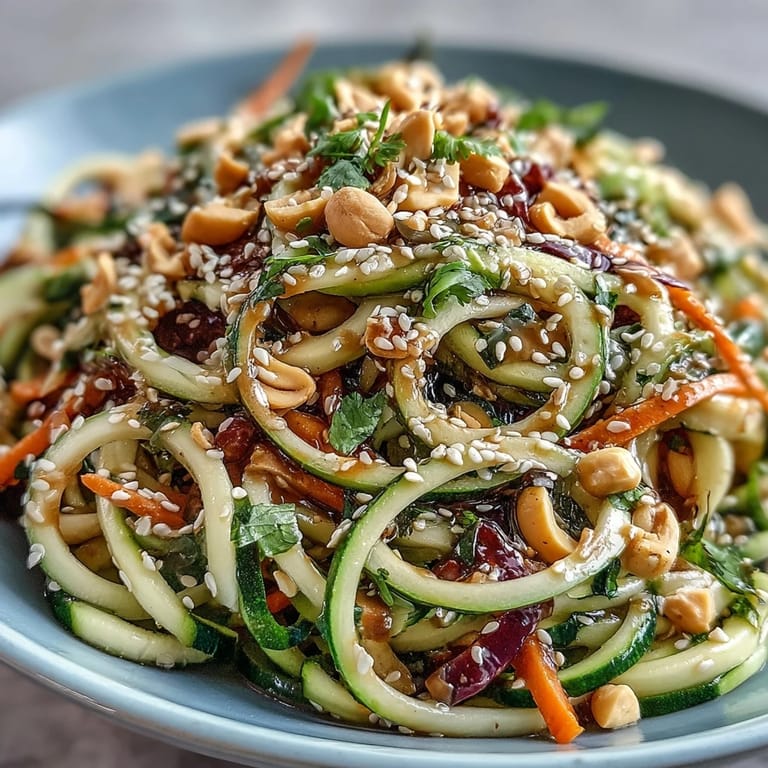
 My spiralizer sat unused in a kitchen drawer for months until a sweltering afternoon when nothing sounded worse than turning on the stove. I pulled it out almost by accident, grabbed whatever vegetables were in the crisper, and drizzled them with sesame-ginger dressing I'd thrown together on impulse. Twenty minutes later, I had a salad so bright and alive it felt like eating summer itself.
I made this for a potluck on a whim, nervous that a noodle salad without any hot elements might feel forgettable next to everyone else's casseroles. Instead, it disappeared first, and someone asked for the recipe before dessert even came out. That moment taught me that simple, honest food often speaks louder than anything complicated.
Ingredients
- Zucchini, spiralized: The foundation that keeps this light and prevents the salad from feeling heavy, no matter how much dressing you add.
- Carrot, spiralized: Adds natural sweetness and a satisfying texture that holds up well without getting soggy.
- Red bell pepper, thinly sliced: Brings brightness and a slight crunch that contrasts beautifully with the softer noodles.
- Red cabbage, thinly shredded: The secret keeper of crispness, staying firm long after everything else starts to soften.
- Cucumber, spiralized: Contributes cooling freshness and a delicate quality that makes each bite feel lighter.
- Green onions, thinly sliced: Their mild sharpness cuts through the richness of the sesame oil and prevents the dish from feeling one-dimensional.
- Fresh cilantro, chopped: Not just garnish, this is what makes the salad taste alive and aromatic.
- Toasted sesame oil: The non-negotiable element that transforms vegetables into something craveable, so use good quality and don't skip the toasting step.
- Rice vinegar: Provides gentle acidity without overpowering the delicate vegetables the way stronger vinegars might.
- Low-sodium soy sauce or tamari: Depth without the saltiness that would wilt your vegetables before you even mix them in.
- Freshly grated ginger: Ground ginger is convenient but fresh ginger brings a warm, alive quality that changes everything about the flavor profile.
- Maple syrup or honey: Balances the salty and sour notes while letting the vegetable flavors shine instead of dominating.
- Garlic, minced: Just one clove keeps the dressing sophisticated instead of aggressive.
- Lime juice: The final touch that brightens and ties all the flavors together into something cohesive.
- Chili flakes, optional: For those moments when you want a whisper of heat rather than a shout.
- Toasted sesame seeds: These finish the dish with texture and nuttiness that proves why garnish is never an afterthought.
- Roasted peanuts or cashews, optional: When you want the salad to feel more substantial and satisfying as a meal.
Tired of Takeout? 🥡
Get 10 meals you can make faster than delivery arrives. Seriously.
One email. No spam. Unsubscribe anytime.
Instructions
- Prepare your vegetable stage:
- Spiralize your zucchini, carrot, and cucumber directly into a large mixing bowl, letting their natural juices drain as you go. Slice the bell pepper, shred the cabbage, and scatter everything together with the green onions, then take a moment to admire how much color you've created.
- Build the dressing:
- In a separate small bowl, whisk together the sesame oil, rice vinegar, soy sauce, ginger, maple syrup, minced garlic, and lime juice until everything turns into a smooth, glossy mixture that smells like it could make cardboard taste good. Stir in the chili flakes if you're using them, tasting as you go because your preference matters more than any recipe.
- Bring everything together:
- Pour the dressing over your vegetables with a gentle hand, using tongs or two forks to toss everything until each strand is coated in that golden-brown liquid. This is where the magic starts, but don't rush it.
- Let it rest and harmonize:
- Give the salad five to ten minutes to sit undisturbed, during which time the vegetables will soften slightly and all those flavors will start conversations with each other. You'll notice the color deepen slightly as the sesame oil and vinegar work their way into the vegetables.
- Finish and serve:
- Transfer everything to a serving platter, shower it with toasted sesame seeds and your chosen nuts, then scatter extra cilantro on top like confetti. Serve immediately while the vegetables still have personality and crunch.
 Save to Pinterest
 Years ago, my friend's daughter declared she didn't like vegetables, and I made this salad mostly out of stubbornness. She ate three servings and asked what magic made the carrots taste like that. I've made it countless times since, and it remains the dish that quietly changes people's minds about what salad can be.
The Dressing Philosophy
The magic here isn't in any single ingredient but in how they balance each other. The sesame oil wants to be rich and heavy, but the vinegar and lime juice keep it from settling into your vegetables like a blanket. The ginger and garlic add complexity without shouting, while the sweetness from maple syrup acts as a gentle mediator between all the different flavor camps. I learned this the hard way by making lopsided versions until I understood that a great dressing is really just a conversation between opposing forces that somehow agree to get along.
Vegetables as Canvas
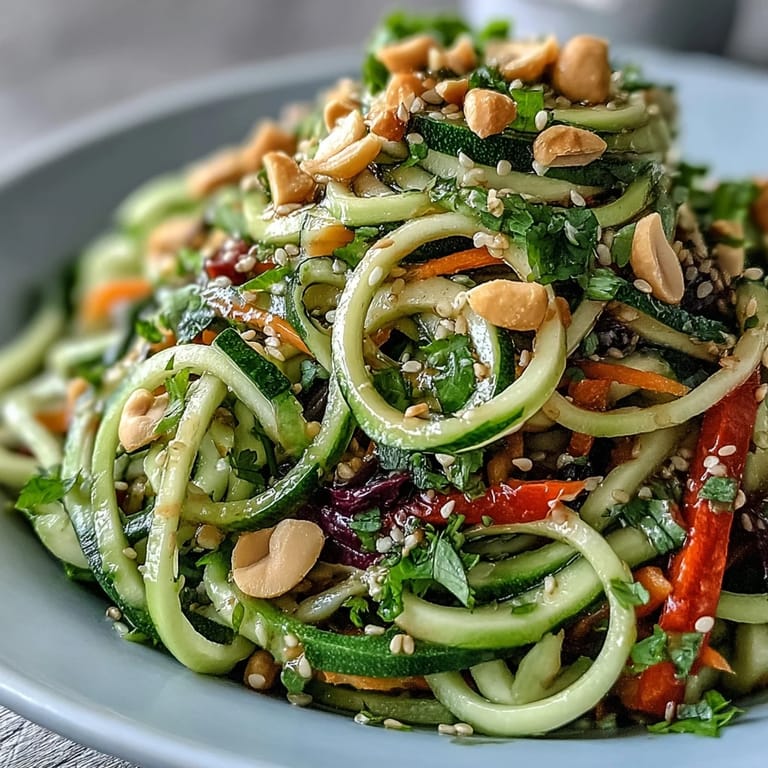
One of the reasons this salad feels less boring than it should is because you're not locked into specific vegetables. Yellow squash brings a different texture than zucchini, while daikon adds a peppery note that catches you by surprise. Beetroot will turn everything pink and taste earthy in a way that makes you reconsider everything else on the plate. I've made this salad in summer with whatever the farmers market had that morning and in winter with sturdy vegetables from storage, and each version felt authentic to its moment.
Making It Your Own
This recipe is patient and forgiving, welcoming additions without complaint. Some days I add baked tofu for protein, other days edamame for a satisfying chew. I've stirred in cooked rice noodles to make it more substantial, scattered crushed pistachios instead of peanuts, and even added a tablespoon of miso to deepen the dressing. The foundation is strong enough to handle your experiments.
- If you're serving this to guests the next day, keep the dressing separate until just before serving to protect your vegetables' texture.
- Make extra dressing even if you think you won't need it, because it's excellent over grilled vegetables, rice bowls, or even plain grilled chicken.
- Taste the dressing before mixing everything together so you can adjust the seasoning when you still have control.
 Save to Pinterest
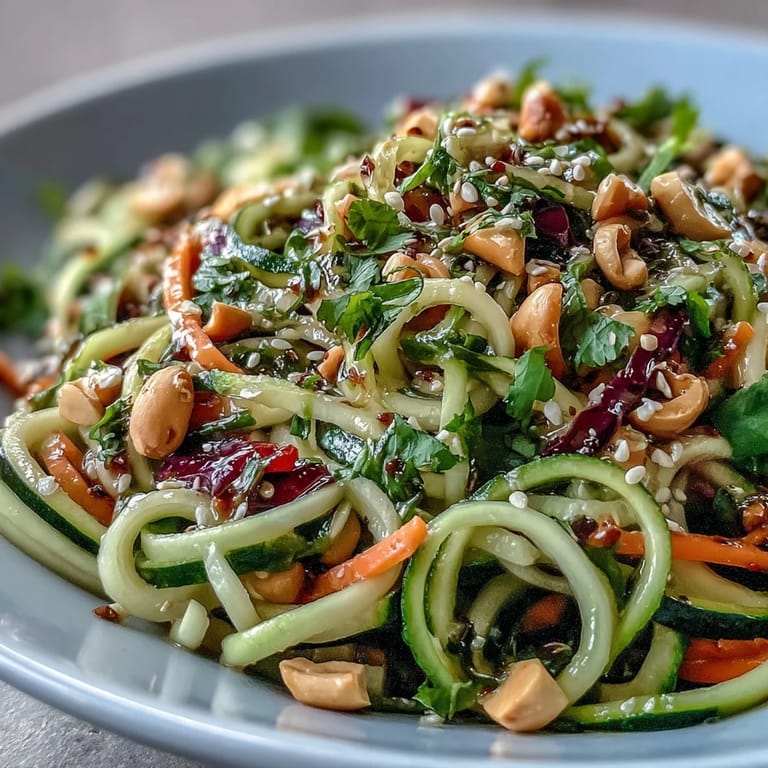
 This salad taught me that not every meal needs to be complicated to be memorable. Sometimes the simplest things, made with attention and better ingredients, become the ones people remember.
Recipe FAQs
- → Can I make this salad ahead of time?
Yes, you can prepare the vegetables and dressing separately up to 24 hours in advance. Store them in airtight containers in the refrigerator. Toss everything together just before serving to maintain the best texture and prevent the vegetables from becoming soggy.
- → What vegetables work best for spiralizing?
Zucchini, carrots, cucumber, yellow squash, daikon radish, and beetroot spiralize beautifully. Choose firm, fresh vegetables for the best results. Softer vegetables like tomatoes don't work well, but can be diced and added as mix-ins.
- → How can I add more protein to this dish?
Baked tofu, edamame, grilled chicken strips, or cooked shrimp make excellent protein additions. You can also top with roasted chickpeas or add a soft-boiled egg for extra substance without overpowering the fresh flavors.
- → Is this salad spicy?
The chili flakes add a mild warmth, but you can easily adjust the heat level. Leave them out entirely for no spice, increase to 1 teaspoon for medium heat, or add fresh sliced chilies for those who enjoy more kick.
- → Can I substitute the sesame-ginger dressing?
Absolutely! Try a peanut-lime dressing, a classic vinaigrette with rice vinegar, or a creamy tahini-based sauce. The neutral vegetable base pairs well with many Asian-inspired dressings and lighter vinaigrettes.
- → Do I need a spiralizer?
While a spiralizer creates perfect noodle shapes, you can use a julienne peeler or simply slice the vegetables into thin strips with a knife. The texture will vary slightly, but the flavor remains equally delicious.