 Save to Pinterest
 The kitchen counter was dusted with flour like fresh snow, and I could hear my neighbor's voice through the open window asking what smelled so good. I was elbow-deep in pasta dough, feeling it transform from shaggy mess to silk under my palms. That afternoon taught me that making ravioli isn't about perfection, it's about the rhythm of your hands and the quiet satisfaction of creating something from almost nothing. The spinach and ricotta filling I'd mixed earlier sat waiting in a bowl, flecked with green and smelling faintly of nutmeg.
I made these for my sister's birthday dinner, and she stood in the doorway watching me cut each square, asking if she could help. We ended up shoulder to shoulder at the counter, pressing fork tines into dough edges and laughing when one ravioli split open in the pot. The kitchen smelled like garlic and tomato, and the table was set with mismatched napkins. It wasn't fancy, but it felt like the kind of meal people remember.
Ingredients
- All-purpose flour: Forms the foundation of your pasta dough, choose unbleached if possible for better texture and a slightly nutty flavor.
- Large eggs: They bind the dough and give it that golden hue, room temperature eggs mix more smoothly into the flour.
- Salt (for dough): Just enough to awaken the flavor without overpowering the delicate filling inside.
- Ricotta cheese: The creamy heart of the filling, whole milk ricotta makes it luscious while part-skim keeps it lighter.
- Fresh spinach: Wilts down dramatically so don't be alarmed by the volume, squeeze it dry or your filling will weep.
- Grated Parmesan cheese: Adds a sharp, salty punch that balances the mildness of ricotta beautifully.
- Egg yolk: Binds the filling and enriches it, saving the white for another use or brushing the pasta edges.
- Nutmeg: A whisper of warmth that makes the filling taste like an old Italian grandmother made it.
- Black pepper: Freshly ground pepper adds a gentle heat that wakes up every bite.
- Marinara sauce: Homemade is lovely but a good jar works perfectly when life gets busy.
- Olive oil: For sautéing garlic and adding a glossy finish to the sauce.
- Garlic cloves: Minced fine and cooked just until fragrant, never burnt or it turns bitter.
- Fresh basil leaves: Torn at the last second so they stay bright green and aromatic on top.
- Extra Parmesan (for serving): Because there's no such thing as too much cheese when it comes to pasta.
Tired of Takeout? 🥡
Get 10 meals you can make faster than delivery arrives. Seriously.
One email. No spam. Unsubscribe anytime.
Instructions
- Make the Pasta Dough:
- Mound your flour on a clean counter and create a deep well in the center like a flour volcano. Crack the eggs into that well, add the salt, and begin whisking with a fork while slowly pulling in flour from the inner walls until a shaggy dough forms, then knead it with your hands for 8 to 10 minutes until it becomes smooth and springs back when poked.
- Prepare the Filling:
- Steam or sauté the spinach until it collapses into a dark tangle, then drain it thoroughly and squeeze out every drop of moisture you can before chopping it finely. Mix the spinach with ricotta, Parmesan, egg yolk, nutmeg, salt, and pepper until everything is evenly distributed and the mixture holds together.
- Roll the Pasta:
- Cut your rested dough in half and keep one piece covered while you work with the other. Roll each half into a thin sheet, about 1/16 inch thick, using a pasta machine or a rolling pin and a lot of patience, dusting lightly with flour to prevent sticking.
- Shape the Ravioli:
- Lay one sheet of pasta flat and place small teaspoons of filling in neat rows, spaced about 2 inches apart. Brush water around each mound, drape the second pasta sheet over the top, and press gently around each pocket to seal, then cut into squares with a knife or ravioli cutter and crimp the edges with a fork.
- Cook the Ravioli:
- Bring a large pot of generously salted water to a gentle boil, then slip the ravioli in a few at a time so they don't crowd. They'll sink at first and then float to the surface after 3 to 4 minutes, that's when you know they're done, so lift them out carefully with a slotted spoon.
- Make the Marinara Sauce:
- Heat olive oil in a saucepan over medium heat, add the minced garlic, and let it sizzle until it smells like heaven, about a minute. Pour in the marinara sauce, season with salt and pepper, and let it simmer for 5 minutes to meld the flavors together.
- Serve:
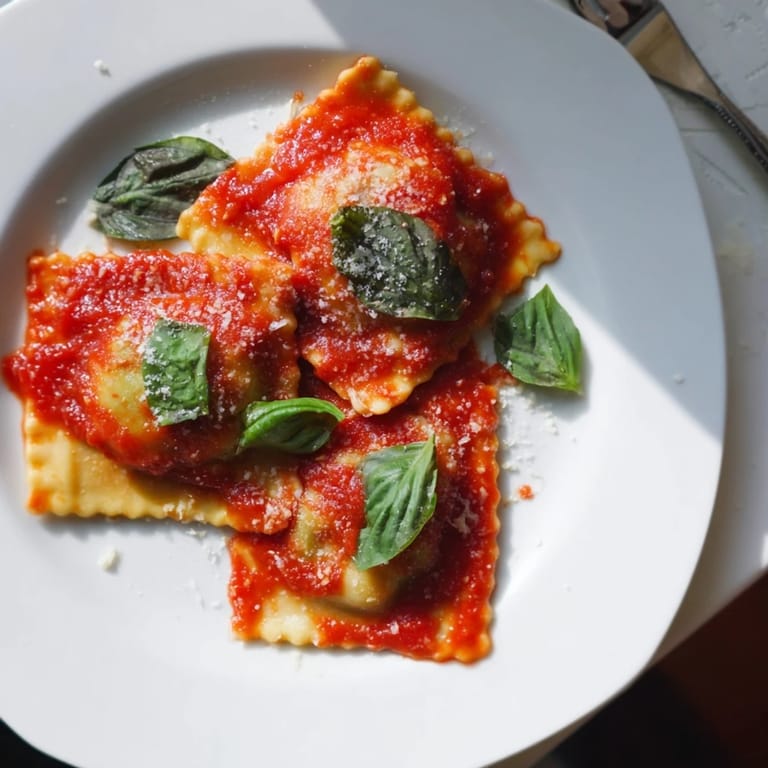
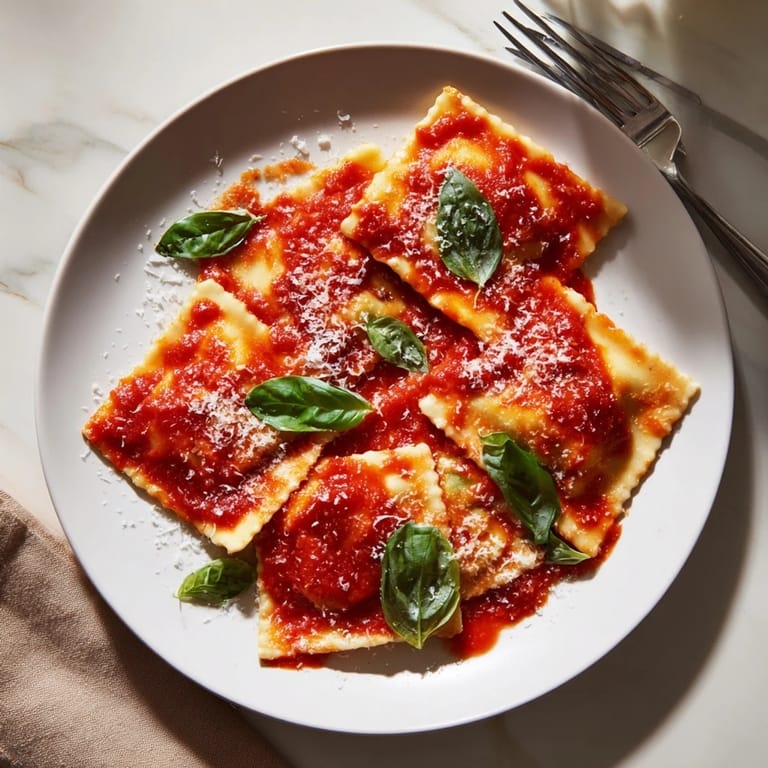
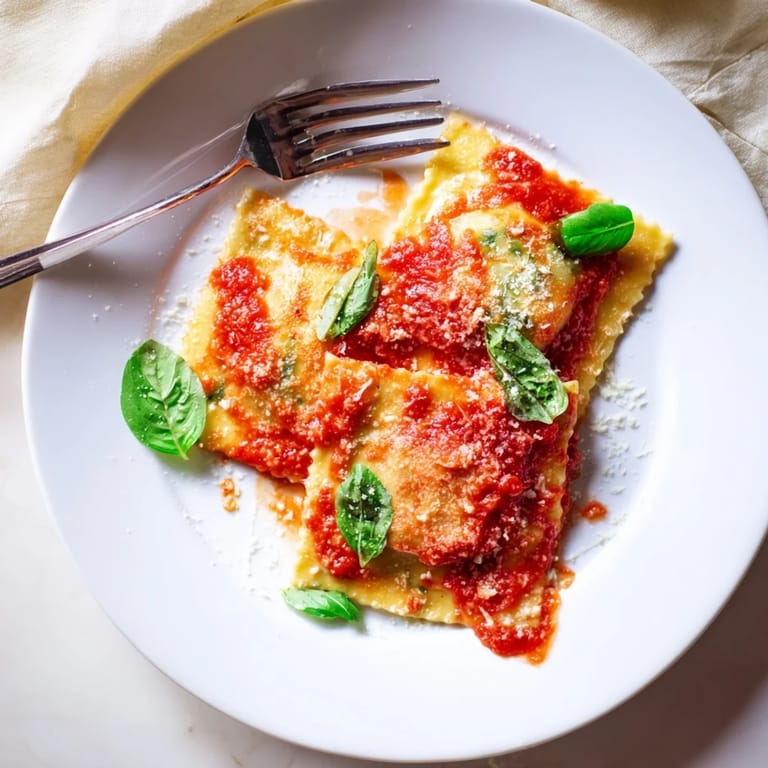
- Spoon a puddle of warm sauce onto each plate, nestle the hot ravioli on top, and finish with more sauce, torn basil leaves, and a generous shower of Parmesan. Serve immediately while the pasta is still steaming and the cheese is just starting to melt.
 Save to Pinterest
 One evening I served these ravioli to a friend who said she didn't like spinach, and she cleaned her plate without a word. Afterward she admitted she hadn't even tasted the greens because everything melted together into something new. That's when I realized this dish has a kind of magic, it turns simple ingredients into something people want to linger over. We sat at the table long after the plates were empty, talking and sipping wine while the kitchen cooled down around us.
Storing and Freezing
If you're not cooking all the ravioli right away, lay them in a single layer on a parchment-lined baking sheet and freeze until solid, then transfer to a freezer bag where they'll keep for up to three months. You can cook them straight from frozen, just add an extra minute or two to the boiling time. Cooked ravioli don't reheat as well, so I prefer to freeze them uncooked and boil only what I need.
Customizing the Filling
Once you master the basic spinach ricotta filling, the variations are endless. I've stirred in sun-dried tomatoes, swapped spinach for kale, and even added a spoonful of pesto when I had some leftover in the fridge. A pinch of lemon zest brightens everything up and makes the filling taste lighter. Just remember to keep the moisture levels in check, wet fillings spell disaster for delicate pasta.
Serving Suggestions
These ravioli shine with marinara, but they're just as happy tossed in brown butter with sage or drizzled with a lemony cream sauce. I like to serve them with a simple arugula salad dressed in olive oil and lemon to cut through the richness. A crisp white wine like Pinot Grigio or a light Chianti makes the meal feel special without any fuss.
- Pair with garlic bread to soak up every last drop of sauce.
- Finish with a drizzle of good olive oil and a crack of black pepper at the table.
- Leftover marinara can be frozen separately and reheated for a quick weeknight dinner.
 Save to Pinterest
 There's something deeply satisfying about pulling a tray of homemade ravioli from the freezer on a busy Tuesday and knowing that dinner is halfway done. These little parcels hold more than spinach and cheese, they hold the memory of an afternoon spent making something beautiful with your own two hands.
Recipe FAQs
- → How do I prevent the ravioli filling from leaking during cooking?
The key is to properly seal the edges. Brush water around each filling mound on the pasta sheet, then press firmly around the filling with your fingers or fork to remove air pockets and create a tight seal. Use a fork to crimp the edges for extra security.
- → Can I make the ravioli ahead of time?
Yes. Once shaped, place ravioli on a parchment-lined baking sheet in a single layer and freeze for at least 2 hours or up to 3 months. Cook directly from frozen, adding an extra 1-2 minutes to the cooking time.
- → What's the best way to drain spinach for the filling?
After wilting or thawing spinach, squeeze it firmly in a clean kitchen towel or cheesecloth to remove as much excess moisture as possible. This prevents the filling from becoming watery and helps the ravioli maintain its shape.
- → How thin should the pasta dough be rolled?
Roll the dough to about 1/16 inch thick, similar to the thickness of a dime. It should be thin enough to see light through it but sturdy enough not to tear when handling. A pasta machine on the thinnest setting works well.
- → Can I use frozen spinach instead of fresh?
Absolutely. Thaw frozen spinach completely and squeeze out excess liquid thoroughly before adding to the ricotta mixture. Use about 3/4 cup thawed frozen spinach as a substitute for 1 cup fresh chopped spinach.
- → Why do my ravioli sink instead of floating?
Ravioli that sink may have air pockets or loose seals. Ensure the dough is sealed tightly around the filling with no trapped air. Also, the cooking water must be at a gentle boil, not a rolling boil, to prevent them from breaking apart.