 Save to Pinterest
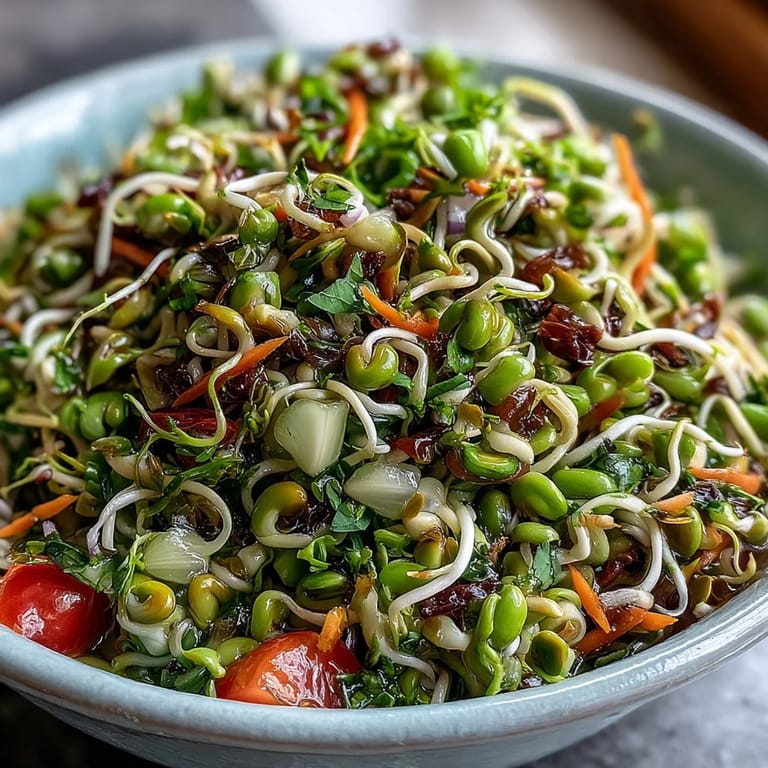
 There's something almost magical about watching sprouts transform in a jar on the kitchen counter, and this salad emerged from my curiosity about turning those tiny green shoots into something substantial. One afternoon, I had three varieties sprouting simultaneously and realized they'd all be ready at once, so I pulled together whatever vegetables were in the crisper drawer and threw together this vibrant mix. The lightness of it surprised me most, the way each bite stayed crisp and alive instead of wilting into heaviness.
I made this for a potluck where everyone was bringing heavy casseroles, and watching people come back for thirds of a simple salad felt like a small victory. Someone asked if I'd made it at a juice bar, which made me laugh, but it stuck with me that something so straightforward could feel like a luxury.
Ingredients
- Mung bean sprouts: These are your foundation, mild and tender with a subtle sweetness that doesn't compete with the other flavors.
- Alfalfa sprouts: They bring a peppery note and stay impossibly delicate, so handle them gently when rinsing.
- Radish sprouts: The secret weapon that adds real spice and personality, cutting through everything else with a sharp, clean bite.
- Cucumber: Dice it small so it mingles easily and releases its cooling water into the salad.
- Tomato: Use something ripe and fragrant, not those pale winter ones, because the dressing will play off its natural acidity.
- Red bell pepper: Sweet, crisp, and visually essential for making this look as good as it tastes.
- Carrot: Grate it rather than chop so it distributes throughout and adds delicate sweetness in every bite.
- Red onion: Keep it finely chopped so the raw sharpness stays present but doesn't overpower the delicate sprouts.
- Fresh cilantro: This isn't optional for me, it ties everything together with a bright, almost citrusy finish.
- Extra-virgin olive oil: Use one you actually like drinking because you'll taste it directly, not buried under cooking heat.
- Lemon juice: Squeeze it fresh just before mixing, as bottled versions taste flat and one-dimensional next to these vibrant vegetables.
- Honey or maple syrup: Optional but it rounds out the dressing, creating balance between the acid and the oil.
- Sea salt and black pepper: Toast your peppercorns and grind them right before using so they still have their volatile oils.
Tired of Takeout? 🥡
Get 10 meals you can make faster than delivery arrives. Seriously.
One email. No spam. Unsubscribe anytime.
Instructions
- Rinse and prepare the sprouts:
- Run cold water over each variety separately in a fine mesh strainer, letting the water cascade through them gently until it runs clear. Shake them well and spread them on a clean kitchen towel for a few minutes to remove excess moisture, which prevents a watery salad later.
- Build the salad base:
- Pour all three sprout varieties into your largest bowl and give them a gentle toss so they're distributed evenly. They're delicate little things, so channel your inner surgeon here rather than treating it like a workout.
- Add the supporting vegetables:
- Scatter the cucumber, tomato, bell pepper, and carrot over the sprouts in layers, finishing with the red onion and cilantro. The order doesn't matter much, but I like to see the colors layered before mixing so it's clear what I'm about to toss together.
- Create the dressing:
- In a small bowl, pour the olive oil and lemon juice together first, then whisk vigorously to start an emulsion. Add the honey if using, then salt and pepper, whisking until it looks creamy and cohesive rather than separated.
- Combine and serve:
- Drizzle the dressing over the salad and toss with your hands or two forks, being gentle so the sprouts don't bruise or break apart. Get it to the table immediately because this salad is at its absolute best the moment it's dressed, still snapping with freshness.
 Save to Pinterest
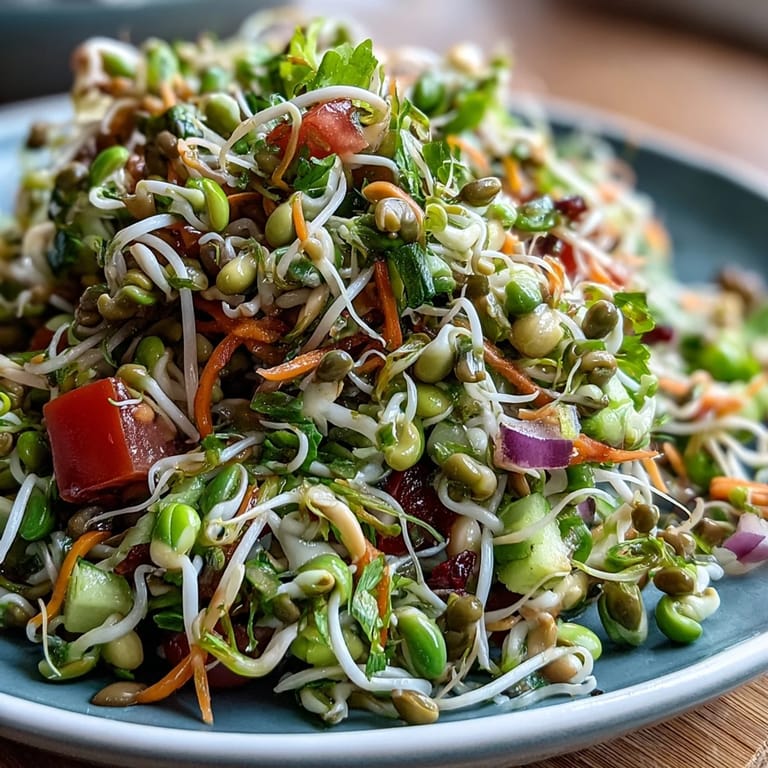
 There was this one dinner where I served this alongside roasted fish, and the way the brightness of the sprouts cut through the richness felt revelatory. That's when I understood this salad wasn't just a side dish but could be the moment that made an entire meal feel balanced and alive.
Sourcing Your Sprouts
Growing your own sprouts takes just a jar, some cheesecloth, and about five days of rinsing them twice daily, which sounds like more work than it is. I started doing this partially to save money and partially because I liked checking on them like they were tiny growing experiments, and now I can't imagine buying sprouts from the store.
Dressing Variations to Explore
That simple olive oil and lemon dressing is the purest expression, but once you've made it a few times you'll want to play with it. I've used lime juice instead of lemon on nights when I wanted something more tropical, and I've added a tiny pinch of cumin or coriander when I was feeling adventurous and it shifted the entire mood of the salad.
Making It a Complete Meal
On its own this is a bright, nutritious starter, but sometimes I've wanted more substance without losing its essence. Layer it into a grain bowl with quinoa or couscous, add some roasted chickpeas for protein, or nestle it against a piece of grilled tofu and suddenly you have dinner instead of a side dish.
- Avocado slices make it creamy and luxurious, turning the whole thing into something you'd order at a very expensive health-conscious restaurant.
- Roasted seeds like sunflower or pumpkin add crunch that survives the dressing, keeping the textural interest alive longer than the sprouts alone would.
- A squeeze of fresh lime juice right at the end brightens everything one more time, a trick I picked up from watching someone make a salad at a farmers market stand.
 Save to Pinterest
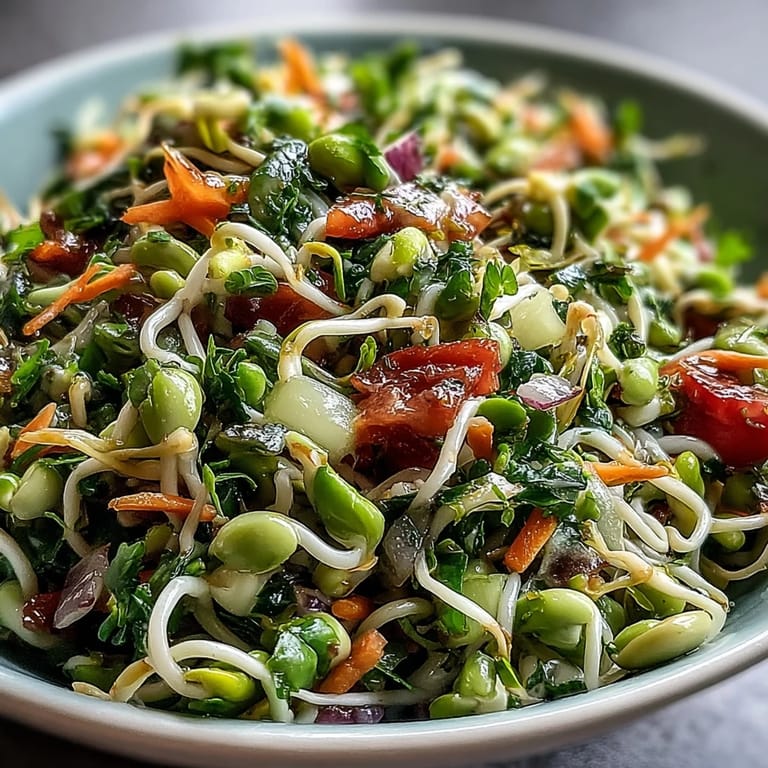
 This salad taught me that sometimes the simplest meals, the ones requiring no heat and minimal technique, can feel the most nourishing and satisfying. When you taste something this fresh and alive, you remember why you wanted to eat healthy in the first place.
Recipe FAQs
- → How long do sprouted seed salads stay fresh?
Best enjoyed immediately for maximum crispness, though dressed salad keeps refrigerated for 1-2 days. Store undressed components separately for up to 3-4 days.
- → Can I use different sprout varieties?
Absolutely. Broccoli, chickpea, lentil, or sunflower sprouts work wonderfully. Mix and match based on availability and preference.
- → What can I add for more protein?
Consider adding quinoa, chickpeas, hemp seeds, or cubed tofu. These maintain the light profile while boosting protein content significantly.
- → Is the honey necessary for the dressing?
The honey or maple syrup provides subtle sweetness balancing acidity. Omit entirely if preferred, or substitute with a pinch of date sugar.
- → How do I properly clean fresh sprouts?
Rinse thoroughly under cold running water, gently separating layers to remove any hulls or debris. Drain well in a colander before combining.
- → Can I make this ahead for meal prep?
Prepare vegetables and dressing separately. Combine just before serving. If taking to work, pack dressing on side and toss when ready.