 Save to Pinterest
 There's this moment when you're standing in a poke restaurant, overwhelmed by all the choices, that you realize the magic isn't in any single ingredient—it's in the freedom to build exactly what you want. That's when I decided to stop ordering and start making poke bowls at home, discovering that the best part isn't the final assembly, it's that quiet satisfaction of knowing every element was chosen with intention. The first time I made this, my kitchen filled with the aroma of ginger and sesame in seconds, and I understood why this bowl has become my go-to when I want something that feels both simple and special.
I made this for friends on a late summer evening, and watching them each customize their own bowl—adding extra avocado here, more spicy mayo there—turned it into something more than dinner. Someone asked if I'd learned to make this in cooking school, and I laughed because the real education came from trial and error in my own kitchen, learning what happens when you marinate fish too long or slice vegetables too thick.
Ingredients
- Sushi-grade salmon or tuna, diced (400 g): The foundation of this bowl—buy from a trusted fishmonger or sushi counter, and ask specifically for sushi-grade to ensure it's safe to eat raw.
- Soy sauce (2 tbsp): This creates the savory backbone of your marinade; I learned that regular soy sauce works fine, but if you have access to tamari, it deepens the flavor beautifully.
- Sesame oil (1 tbsp): A little goes a long way—this is concentrated aromatics, the kind of ingredient that transforms everything it touches.
- Rice vinegar (1 tbsp plus 2 tbsp for rice): Brightens the marinade with gentle acidity without the sharp bite of regular vinegar.
- Honey or agave syrup (1 tsp): Just enough sweetness to balance the salty-savory elements; I prefer honey because it dissolves cleanly into the marinade.
- Fresh ginger, grated (1 tsp): Use a microplane for the finest texture—it releases more of that warm, spicy essence into the fish.
- Sushi rice or short-grain rice (320 g): The neutral, slightly sticky foundation that holds everything together and absorbs all those beautiful flavors.
- Water (480 ml): Essential for cooking rice properly; cold water is key for rinsing away excess starch.
- Sugar (1 tbsp): Seasons the rice with a gentle sweetness that's traditional in sushi preparation.
- Salt (½ tsp for rice, plus to taste): Enhances every element; taste as you go when seasoning the rice.
- Ripe avocado (1): Slice just before assembling—if you prepare it too early, it oxidizes and loses that bright green color.
- Cucumber, thinly sliced (1 medium): Cool, refreshing, and adds that crisp textural contrast you need.
- Carrots, julienned (2 medium): A touch of natural sweetness and crunch; julienne them thin so they soak up the dressing.
- Edamame beans, cooked and shelled (100 g): Adds protein and a pop of bright green; I buy frozen and thaw them for convenience.
- Radishes, thinly sliced (4): Peppery and crisp—these keep your bowl from feeling too heavy.
- Spring onions, thinly sliced (2): A mild onion flavor that stays in the background but anchors everything together.
- Nori sheets, cut into thin strips (1): The umami element that whispers seaweed-salty complexity through each bite.
- Toasted sesame seeds (1 tbsp): Buy them already toasted, or toast raw seeds in a dry pan for 2-3 minutes until fragrant.
- Spicy mayo (4 tbsp): Mix mayo with sriracha to your heat preference—I find 1-2 tsp gives you warmth without overwhelming.
- Microgreens or sprouts (optional): The final flourish that looks beautiful and adds peppery complexity.
Tired of Takeout? 🥡
Get 10 meals you can make faster than delivery arrives. Seriously.
One email. No spam. Unsubscribe anytime.
Instructions
- Rinse and ready your rice:
- Hold the sieve under cold running water and stir the rice gently with your fingers until the water runs from cloudy to clear—this removes excess starch and helps each grain stay separate. Some people skip this step, but I've learned it makes all the difference between fluffy and gummy rice.
- Cook the rice properly:
- Combine rinsed rice and cold water in your saucepan, bring to a boil over medium-high heat, then immediately lower to the gentlest simmer, cover, and leave untouched for exactly 15 minutes. After 15 minutes, remove from heat, keep the lid on, and let it steam for another 10 minutes—this final resting is when the rice finishes cooking in its own steam.
- Season while warm:
- The moment you remove the lid, the rice is still steaming and ready to absorb flavor—gently fold in the rice vinegar, sugar, and salt with a wooden spoon, using a slicing motion rather than stirring. Taste a grain and adjust seasoning; at this stage, it's easy to add more salt if needed.
- Build your marinade and marinate the fish:
- In a separate bowl, whisk together soy sauce, sesame oil, rice vinegar, honey, and grated ginger until the honey dissolves completely. Add your diced fish and sesame seeds, turning gently so each piece gets coated without breaking apart, then slide it into the refrigerator for 10–15 minutes—any longer and the acid starts to cook the fish in an unpleasant way.
- Prepare toppings strategically:
- Slice everything just before assembly to preserve texture and color—avocado oxidizes quickly, cucumber releases water if cut too early, and radishes stay crispest right up until serving. Arrange each prepared vegetable in its own small pile so you can see what you're working with.
- Assemble with intention:
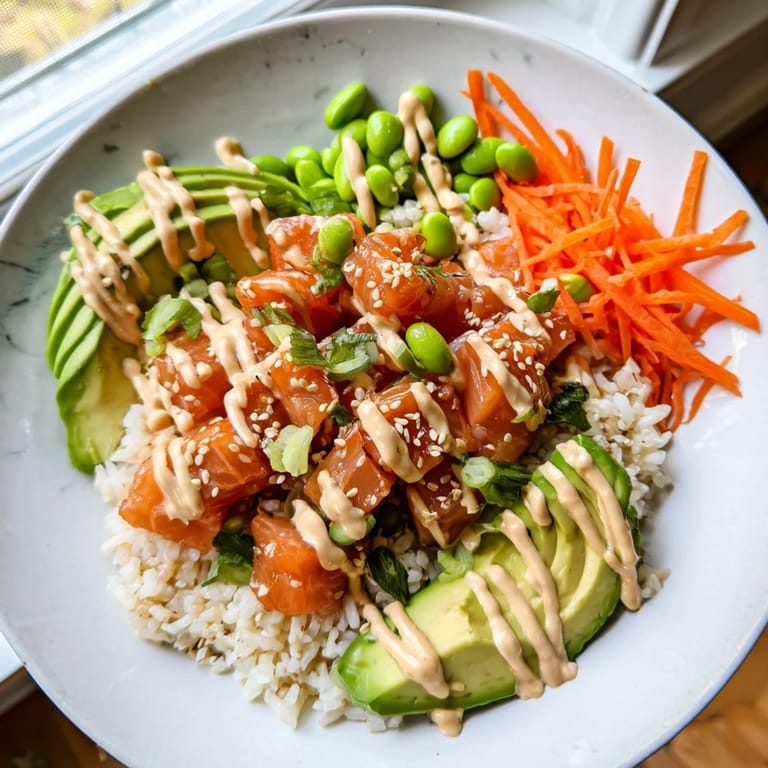
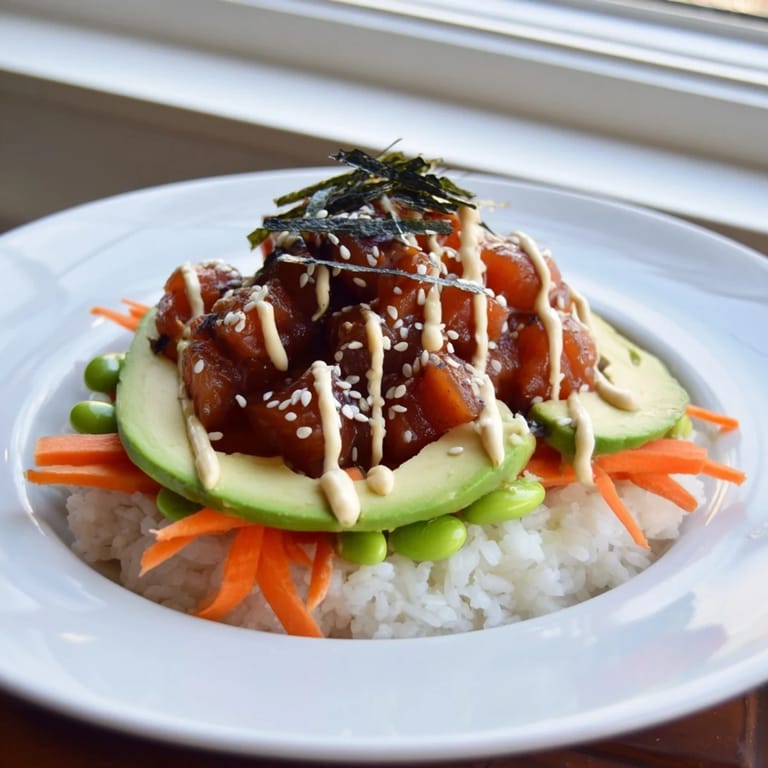
- Divide your cooled rice among four bowls, creating a small well in the center of each with the back of your spoon. Arrange the marinated fish at the top of the well, then position each vegetable around it like you're creating a small edible garden—color and variety matter here, both for how it looks and how each bite feels different.
- Dress and serve immediately:
- Drizzle spicy mayo in a thin zigzag pattern, add soy sauce to taste, scatter nori strips and extra sesame seeds across the top, and nestle a lime wedge on the side. Serve right away while everything is at its best temperature and texture.
 Save to Pinterest
 There was a moment when my partner took a bite and closed their eyes, then asked why I don't make this every week—and that's when I realized this bowl had become more than a recipe to me. It was proof that something simple, made with care and good ingredients, sits in that perfect space between casual and special.
Why This Bowl Works
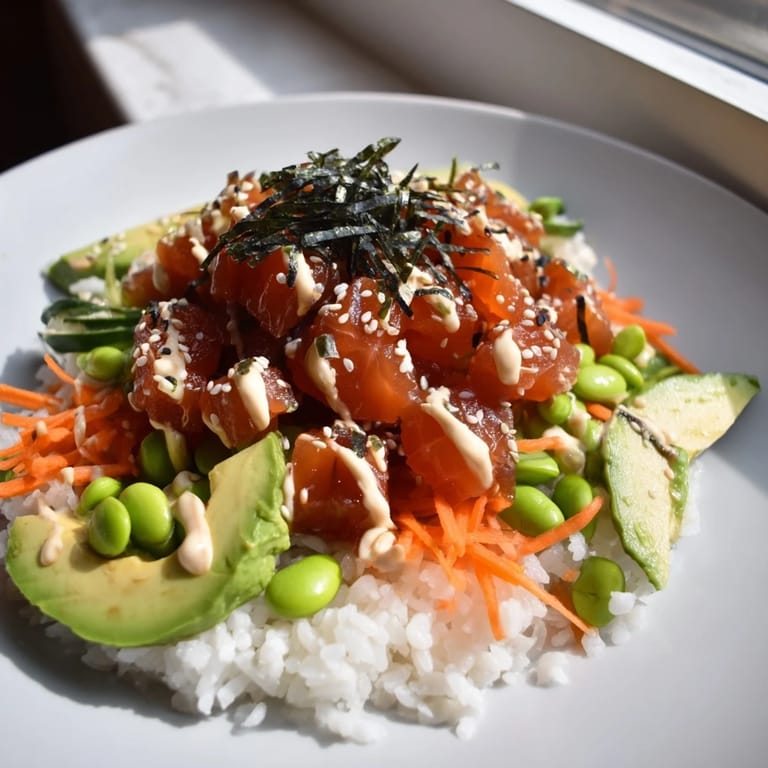
The genius of a poke bowl is balance—you've got cool, refreshing vegetables and creamy avocado playing against the warm, umami-rich rice and seasoned fish. The textures matter too: crunch from radishes and cucumber, smoothness from avocado, chewiness from nori, and that moment when a sesame seed pops between your teeth. When you eat it, you're not just tasting individual ingredients; you're experiencing how they speak to each other, and that conversation is what makes this bowl so satisfying.
Making It Your Own
The beauty of a poke bowl is that it invites customization without losing its identity—I've made versions with mango and pineapple in summer, swapped edamame for chickpeas on quieter weeks, and even experimented with a tofu-based version for vegetarian friends. The marinade is flexible too; if you prefer less heat, reduce the sriracha in the mayo, or if you like it spicier, add a touch to the fish marinade itself. What stays consistent is the foundation: good rice, quality fish or tofu, fresh vegetables, and enough sauce to pull everything together.
Pairing and Serving
This bowl pairs beautifully with a crisp Sauvignon Blanc if you're in a wine mood, though iced green tea feels more natural to me—something about the clean, slightly grassy notes complements the fish and ginger perfectly. I've also served it at lunch gatherings where everyone assembles their own bowl tableside, turning it into something interactive and fun. If you're making this for guests, prep all your vegetables an hour ahead and keep them in separate containers; the rice and fish can be ready just before serving, and you'll barely touch the stove once people arrive.
- This is the kind of meal that looks more impressive than it actually is to make.
- Leftover rice keeps for three days and works great in fried rice the next day.
- Most of the components can be prepped the morning of, making last-minute assembly incredibly fast.
 Save to Pinterest
 Making a poke bowl at home reminded me that the best meals are the ones where you get to decide exactly what goes into them. It's not fancy, but it feels like you've treated yourself well.
Recipe FAQs
- → What type of fish is best for this bowl?
Sushi-grade salmon or tuna works best for fresh flavor and tender texture when marinated and served raw.
- → Can I use a substitute for fish?
Yes, marinated tofu or tempeh can be used as a plant-based alternative, maintaining similar flavors and texture.
- → How do I prepare the rice for this bowl?
Cook short-grain or sushi rice, then season it with rice vinegar, sugar, and salt for a slightly tangy and sweet base.
- → What are good sauce options to accompany the bowl?
A spicy mayo made from mayonnaise and sriracha, along with extra soy sauce for drizzling, adds a balanced spicy and savory kick.
- → How should the vegetables be prepared?
Slice or julienne fresh vegetables like avocado, cucumber, carrots, and radishes thinly to provide texture contrast and color.
- → Are there any allergen considerations?
This dish contains fish, soy products, eggs in mayo, and sesame seeds; always check sauces for gluten if needed.